
Quick Takeaways
- Personal diaries and journals contain irreplaceable memories and family history that can’t be recreated
- Physical journals are vulnerable to fire, water damage, deterioration, and loss
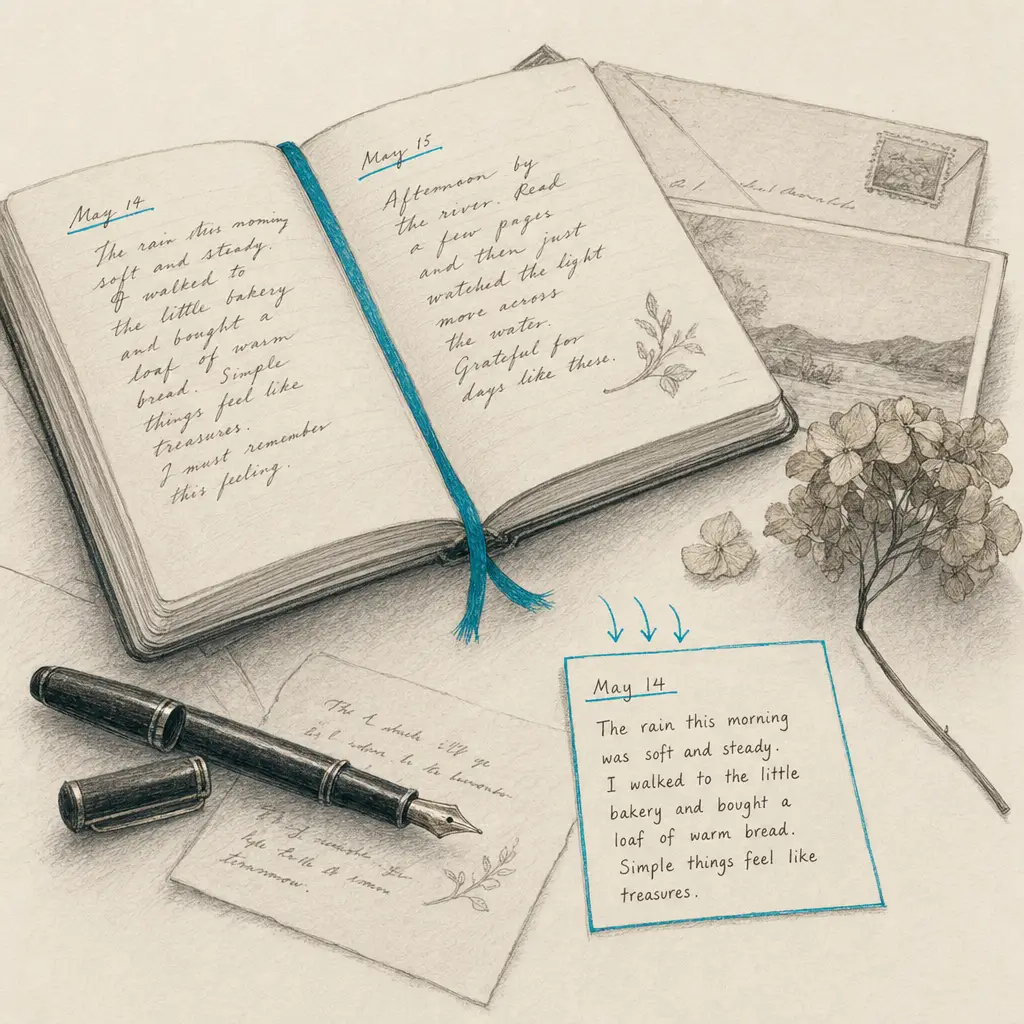
- Handwriting OCR converts your entries into searchable digital text while preserving the original
- Digitization creates secure backups and makes it possible to find specific memories instantly
- Your private journals remain completely private throughout the conversion process
You have years of handwritten journals sitting on a shelf or stored in boxes. They hold memories, reflections, and personal history you can’t recreate. But when you want to find that entry about a specific trip, or remember what you were thinking during a particular period of your life, you face hours of page-turning with no guarantee you’ll find what you’re looking for.
Maybe these journals are yours. Maybe they belonged to a parent or grandparent who’s no longer here to share their stories. Either way, the words exist only on paper, vulnerable to accidents and increasingly difficult to access as the pages age.
Handwriting OCR converts your handwritten diaries and journals into searchable digital text. Your personal writing becomes instantly findable while the original remains safe. The process protects your privacy completely, because your journals remain yours alone.
Why Your Handwritten Diaries Matter More Than You Think
Handwritten journals aren’t just old notebooks. They’re the unfiltered record of your life or your family’s history, written in the moment without the polish of a memoir.
Personal History Worth Preserving
Your journals hold details you won’t remember years later. The name of someone who mattered at the time. How you felt during a significant life transition. Small moments that seemed ordinary when you wrote them but become precious with distance.
For inherited journals, the value deepens. A grandmother’s diary from the 1940s contains her voice, her perspective, her daily reality. These aren’t stories told secondhand. They’re direct testimony to lived experience, written by someone who’s gone but whose words remain.
Family historians and genealogists know that diaries provide context missing from official records. Census data tells you where someone lived. A diary tells you why they moved, what they worried about, who they loved.
The Risk of Losing Your Story
Paper doesn’t last forever. Fires, floods, and accidents can destroy years of journals in minutes. Even without disaster, paper deteriorates. Ink fades. Pages become brittle. Handwriting that’s clear today may be harder to read in twenty years.
Fires, floods, and illness can damage or destroy your heritage in the blink of an eye.
Physical journals also get lost in more mundane ways. They’re misplaced during moves, stored in attics that leak, or left behind when someone downsizes. Once gone, they’re gone permanently. You can’t rewrite what you were thinking on a specific day years ago.
Memories You Can’t Remember Without Searching
The human memory is selective and imperfect. You remember broad strokes but lose specifics. Transcribing journals awakens forgotten memories and emotions you wrote about but no longer recall without prompting.
The problem is that finding those entries requires reading through pages of material. If you kept journals for decades, locating a specific memory means potentially searching through thousands of pages. Most people don’t have that kind of time, so the memories stay buried in notebooks.
The Problem With Keeping Journals Only on Paper
Physical journals worked for centuries, but they have limitations that become more apparent as time passes.
Physical Vulnerability
Paper burns. Water destroys it. Journals left in attics or basements face temperature extremes, humidity, and pests. A single accident can eliminate decades of personal history.
Even careful storage doesn’t eliminate risk. Natural disasters don’t announce themselves. House fires happen. Pipes burst. The best-protected paper journal is still more vulnerable than a backed-up digital file.
Some people keep journals as their only record of certain periods in their lives. When those journals are damaged or lost, there’s no recovery. The memories exist nowhere else.
Impossibility of Searching Years of Entries
You remember writing about something, but not when. Was it three years ago or five? Spring or fall? You flip through journals hoping something triggers recognition. Sometimes you find it. Sometimes you give up.
This limitation means most people rarely revisit their journals. The effort required to find specific content makes the entire collection effectively inaccessible except for sequential reading from the beginning.
| Paper Journals | Digital Searchable Text |
|---|---|
| Read sequentially to find entries | Search instantly across all journals |
| Hours to locate specific memories | Seconds to find any keyword or phrase |
| One person at a time can access | Easy to share with family (if you choose) |
| Deteriorates over time | Digital copies don’t degrade |
Difficulty Sharing With Family
Maybe you want to share certain journal entries with your children or grandchildren. With paper journals, that means physically handing over the original or photocopying individual pages. Neither option is practical for sharing multiple entries or allowing family members to explore on their own.
Inherited journals present similar challenges. Siblings who want to read a parent’s or grandparent’s diaries must pass the physical books around or make copies. The process is cumbersome enough that it often doesn’t happen, and family history remains locked away.
How Handwriting OCR Works for Personal Diaries
Converting handwritten journals to digital text uses specialized technology designed to recognize varied handwriting styles, including cursive handwriting common in older diaries.
Converting Your Writing Into Searchable Text
OCR technology processes scanned images or photos of your journal pages, recognizing individual words and converting them into editable, searchable digital text. The system handles different handwriting styles, varied ink colors, and pages that show age or wear.
This isn’t the same as simply scanning journals to PDF. Scanned images let you view the pages digitally, but you still can’t search the content. Converting handwriting to text makes every word searchable, which transforms how you can use your journals.
The technology works even with faded ink, cursive writing, and personal shorthand you developed over years of journaling. Accuracy varies depending on handwriting clarity, but you’ll get searchable text that captures the majority of your content.
Privacy and Security Throughout the Process
Your journals are deeply personal. The thought of uploading them anywhere raises legitimate privacy concerns. This is why privacy protections matter more for personal diaries than almost any other document type.
Your journal entries remain completely private. The files are processed only to deliver your converted text and are not used to train AI models or shared with anyone. Your private thoughts stay private.
Handwritten data can contain identifying features like unique writing styles. Reputable services process your content solely to create the searchable text you need, then delete the files. Nothing is retained, reused, or analyzed beyond completing your conversion.
Your personal diaries remain private and are processed only to deliver your results.
What Happens to Your Personal Content
After processing, you receive digital text files containing your journal entries. These files belong to you completely. You can store them locally, back them up to your preferred cloud service, or keep them offline entirely.
The original service doesn’t retain copies of your journals or the converted text unless you explicitly choose to store them there. For maximum privacy, many people download their converted journals and delete them from any service they used for processing.
From Handwritten Pages to Digital Memories
The process of digitizing your journals is more straightforward than you might expect, and you control every step.
Preparing Your Journals for Digitization
Start by creating digital images of your journal pages. You can use a smartphone camera, a flatbed scanner, or a scanning app. Many people photograph their pages using their phone, which is quick and requires no special equipment.
Good lighting helps. Place journals on a flat surface and photograph each page straight on rather than at an angle. You don’t need perfect images, but clearer photos produce better OCR results.
For older or more fragile journals, handle them carefully. If pages are brittle or the binding is damaged, a professional scanning service might be worth considering. These services are experienced with delicate materials and can digitize without causing further wear.
The Conversion Process
Once you have images of your pages, you upload them to an OCR service. The system processes each page, recognizing your handwriting and converting it to text. This happens automatically without manual transcription.
Processing time depends on the number of pages, but the actual conversion is much faster than typing everything yourself would be. A journal that would take weeks to transcribe manually can be converted in hours or less.
Digital backups offer convenience and security. By converting your entries to searchable text, you’re ensuring they’re safely stored and accessible. The original journals remain yours to keep physically, while the digital version provides a secure backup.
Organizing and Backing Up Your Digital Journals
After conversion, you’ll want to organize your digital journals in a way that makes sense for you. Some people maintain one file per journal. Others combine entries by year or topic. The digital format gives you flexibility the physical books never allowed.
Back up your converted journals in multiple locations. Keep copies on your computer, an external hard drive, and a secure cloud service. This redundancy protects against data loss just as digitization protected against losing the physical journals.
You might also consider how you’ll access these files in the future. Plain text files or common formats like PDF ensure you can read your journals even as software changes over decades.
What You Can Do With Digitized Diaries
Searchable digital journals open possibilities that paper journals can’t match.
Finding Specific Memories Instantly
Instead of reading through years of entries hoping to recognize what you’re looking for, you search. Type a name, a place, or a phrase, and find every mention across all your journals in seconds.
This capability transforms how you can use your own writing. Want to remember everything you wrote about a particular friend? Search their name. Curious what you were thinking during a specific period? Search the dates or events from that time.
The memories are still yours, still in your words. But now they’re accessible when you want them instead of buried in pages you’d need hours to review.
Creating Family Legacy Documents
For inherited journals, digitization lets you share selected entries with family members while protecting the originals. You can extract passages about specific relatives, compile stories from particular time periods, or create themed collections.
Siblings can each have complete digital copies of a parent’s journals without needing to pass around the physical books. Grandchildren can search for stories about their own parents as children. The family history becomes accessible to everyone who should have it.
You control what you share and with whom. The digital format makes selective sharing practical in ways physical journals never allowed.
Combining Photos and Journal Entries
Many people enhance their digitized journals by adding photos from the same time periods. An entry about a family vacation pairs with pictures from that trip. Reflections on a life event connect to photographs that capture the moment.
This combination creates richer family archives than either journals or photos alone provide. The words give context to the images. The images illustrate what the words describe. Together, they preserve both the events and how they felt to the person living them.
Protecting Your Personal History
Your handwritten journals hold irreplaceable memories. They document your life or preserve the voice of someone who mattered to you. But as long as they exist only on paper, they remain vulnerable and increasingly difficult to access.
Digitizing personal diaries creates secure backups while making your writing searchable. You can find specific memories instead of hoping you stumble across them. You can share family history without risking the originals. You can preserve the words before the paper fails.
The technology handles varied handwriting styles, faded ink, and aged pages. Your deeply personal handwriting stays completely private throughout the process. Nothing is shared, reused, or retained beyond creating the searchable text you need.
Your journals matter. The memories inside them deserve protection and accessibility. Handwriting OCR provides both, converting your handwritten pages into digital text that lasts while preserving the originals you treasure.
Try Handwriting OCR with free credits to see how your personal diaries convert to searchable text. Your private journals remain private, and your memories become instantly findable.
Frequently asked questions
Is it safe to upload my personal diary for OCR conversion?
Reputable OCR services process your diary pages only to deliver your converted text and do not use your content for any other purpose. Your files should not be used to train AI models, shared with third parties, or retained after processing. For maximum privacy, choose services that explicitly state they don't store your documents and allow you to delete files immediately after downloading your converted text. Always review the privacy policy before uploading deeply personal content.
Can OCR read old handwritten diaries in cursive?
Yes, modern handwriting OCR can process cursive handwriting commonly found in older diaries and journals. The technology is specifically designed to handle varied handwriting styles, including cursive script. Accuracy depends on factors like handwriting clarity, ink condition, and page quality, but OCR can successfully convert most cursive diaries into searchable text. Faded ink and aged pages may reduce accuracy, but you'll still get usable results that are much faster than manual transcription.
What's the best way to digitize inherited family journals?
Start by creating high-quality scans or photos of every page to preserve the content. Handle fragile journals carefully, and consider professional scanning services for very old or damaged books. Once you have digital images, use OCR to convert the handwriting into searchable text. This gives you both visual preservation (the scanned images) and searchable content (the converted text). Store multiple backup copies in different locations, and consider sharing digital copies with family members while protecting the original journals.
How long does it take to convert years of handwritten journals to digital text?
The actual OCR conversion happens quickly, usually processing pages in seconds each once uploaded. The time-consuming part is creating scans or photos of your journal pages, which depends on how many journals you have and what equipment you use. Photographing pages with a smartphone might take a few minutes per journal. Professional scanning services can handle large volumes but require shipping time. Overall, digitizing multiple years of journals is still far faster than manually typing every entry, which could take hundreds of hours.
Will OCR work on journals with drawings, doodles, or mixed content?
OCR focuses on converting text to searchable digital format and will process the written portions of your journal pages. Drawings, doodles, and sketches will appear in scanned images but won't be converted to text (since they aren't text). The OCR will extract the handwritten words while preserving the overall page structure. If your journals mix writing with artwork, you'll get searchable text for the written parts plus the complete scanned images showing everything including drawings.