
Accuracy on real handwriting
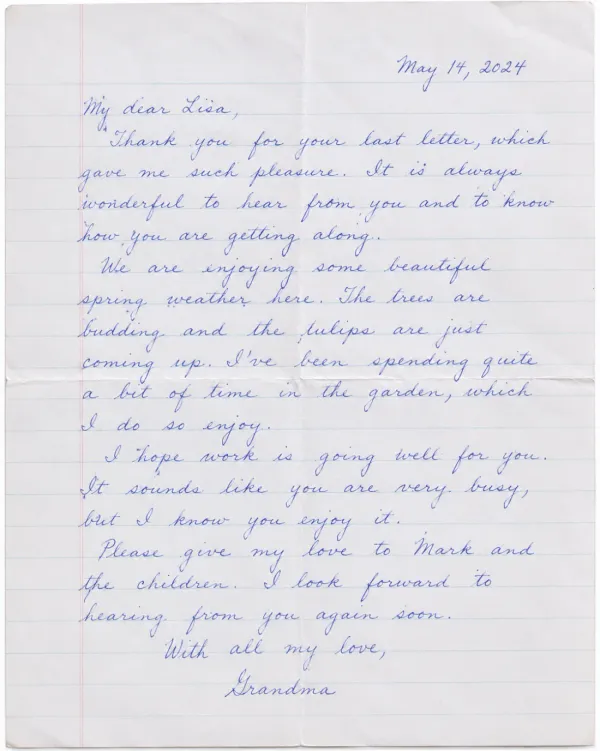
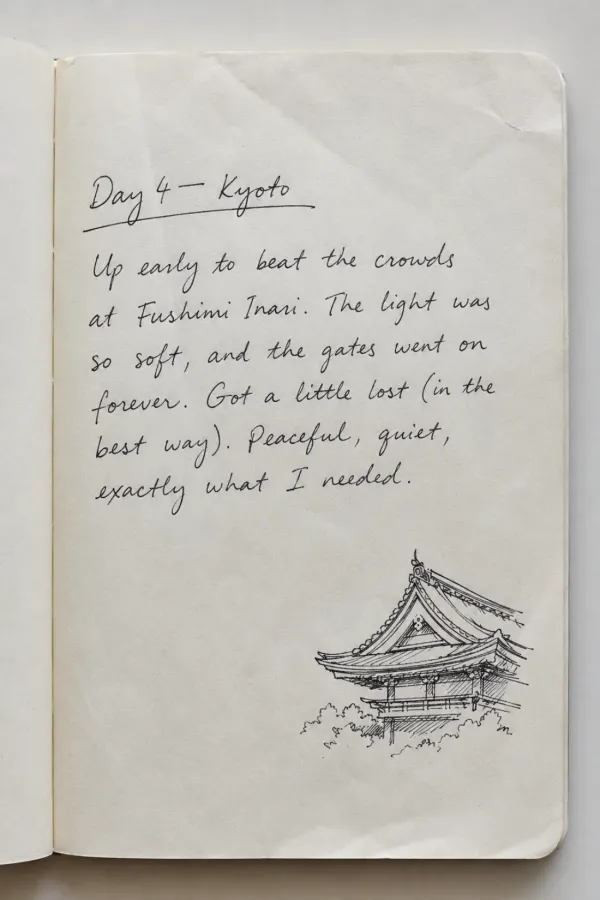
Reads connected cursive, faded ink, and a hand that changed over the years, including writing you can no longer read yourself, so the names, dates, and stories come through as written.
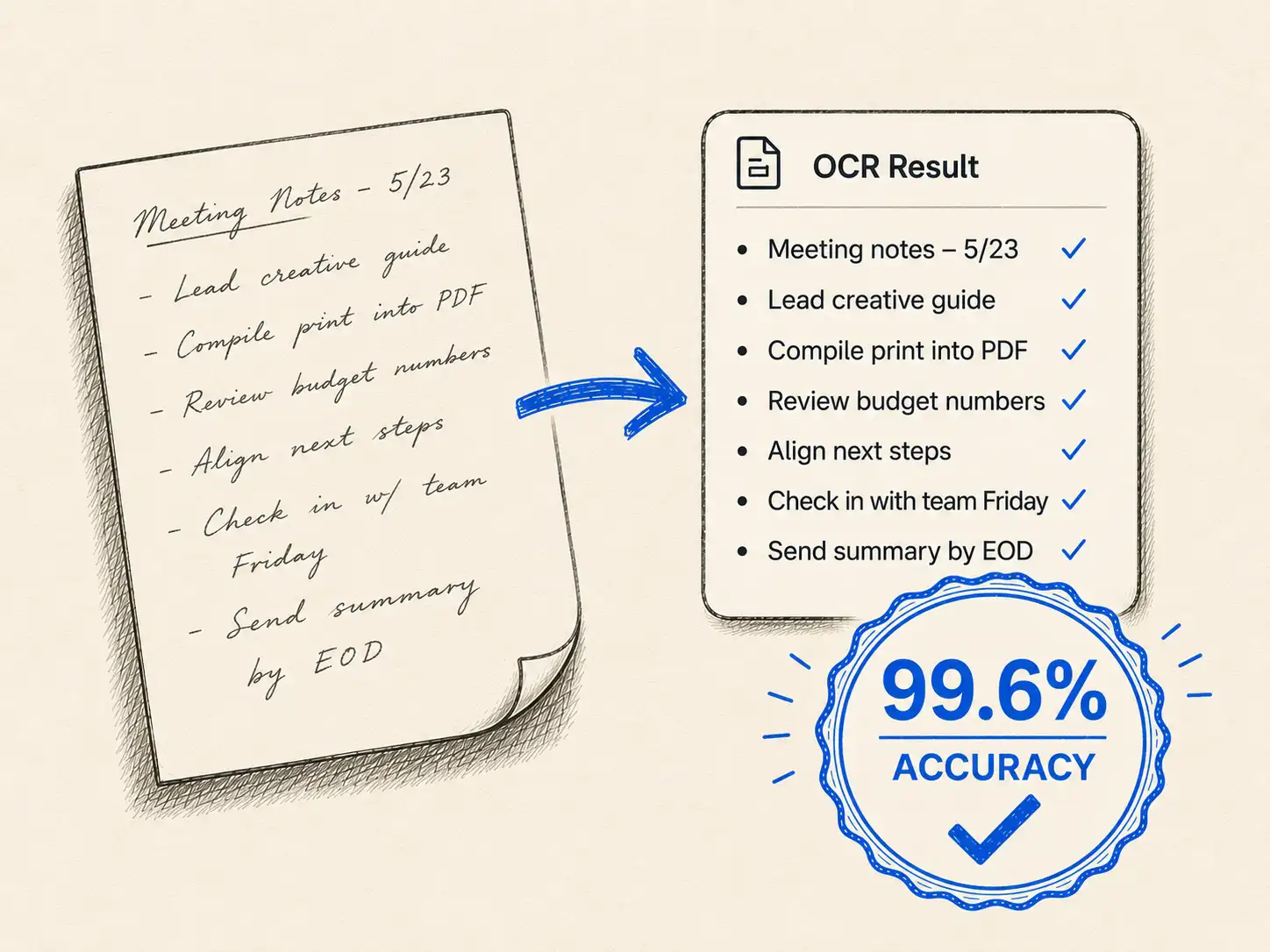
Whether it's a box of inherited letters or the diary and notes you keep today, Handwriting OCR turns handwriting into clear, searchable text, even faded cursive and a hand that changed over the years.
No card needed. Under 1% word error rate on everyday handwriting.


Loved by families and memory-keepers
From people digitizing a parent's journals or translating letters they could never read, to anyone wrangling their own handwritten notes.
"Shockingly accurate, even on pages that are a challenge for my own eyes. I'm transcribing a diary that spans 25 years, and I work in public libraries, so I'll be recommending it to anyone digitizing historical documents."
"I got all of my grandfather's letters transcribed into English, and I'm now planning a book I never thought I could write. I could never have done this without Handwriting OCR. I mention you in genealogy groups all the time."
"I kept shaking my head in disbelief. It read documents in my own handwriting that I was unable to decipher myself. I'm now considering reprocessing a couple of thousand pages I'd already done elsewhere."
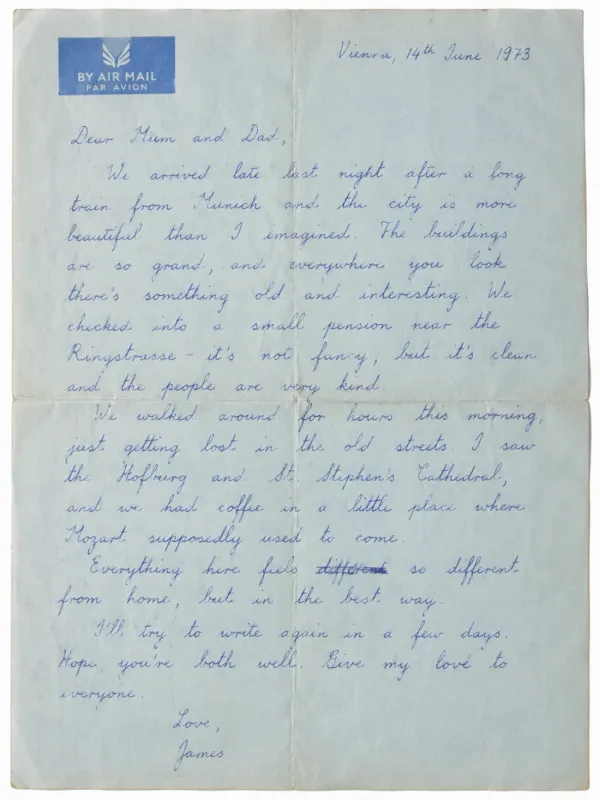
"Your test result was much better than some others I tried. I'm using it to transcribe a collection of old letters written in the early 70s while travelling in Europe, and so far it's working out really well."
"I found you through an AI search and the accuracy was excellent. I have more than four thousand personal pages to work through, and this is finally making the project feel possible."
"I scanned a few pages of my wife's chicken-scratch notes and the text came back perfectly interpreted. That was the moment I subscribed. I have thirty years of her notes to get through."
How it works
Whether it's a single letter or a lifetime of journals, the workflow is the same three steps: upload, let the AI transcribe, then export and search. No setup, and results in seconds.
 1
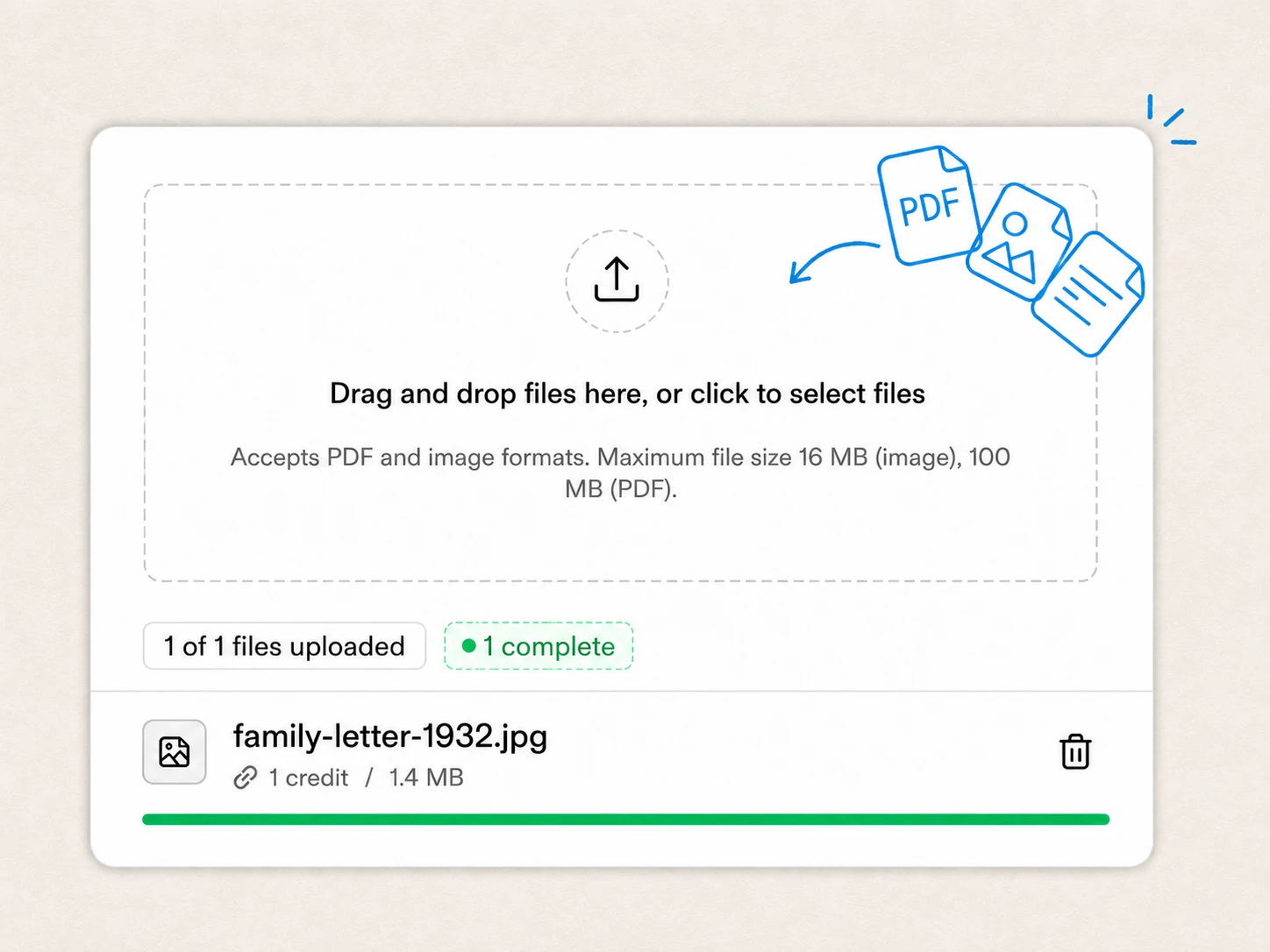
1 Snap a diary page with your phone or drop in a scan or PDF of a letter. No format conversion or preprocessing needed, and fragile pages only need photographing once.
 2
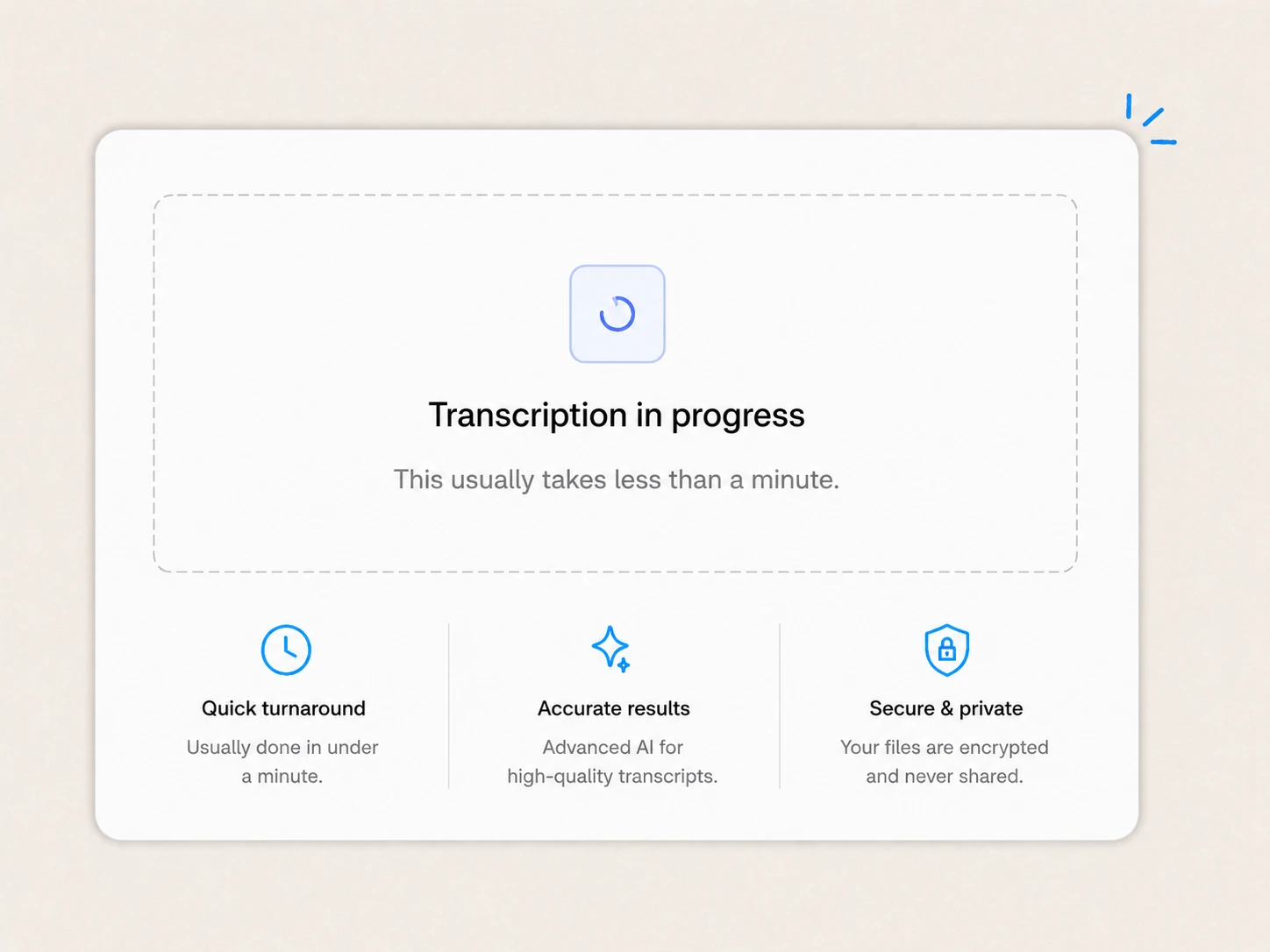
2 Our model transcribes personal cursive, faded ink, and a hand that changed over decades, keeping dated entries and paragraph structure as they were written.
 3
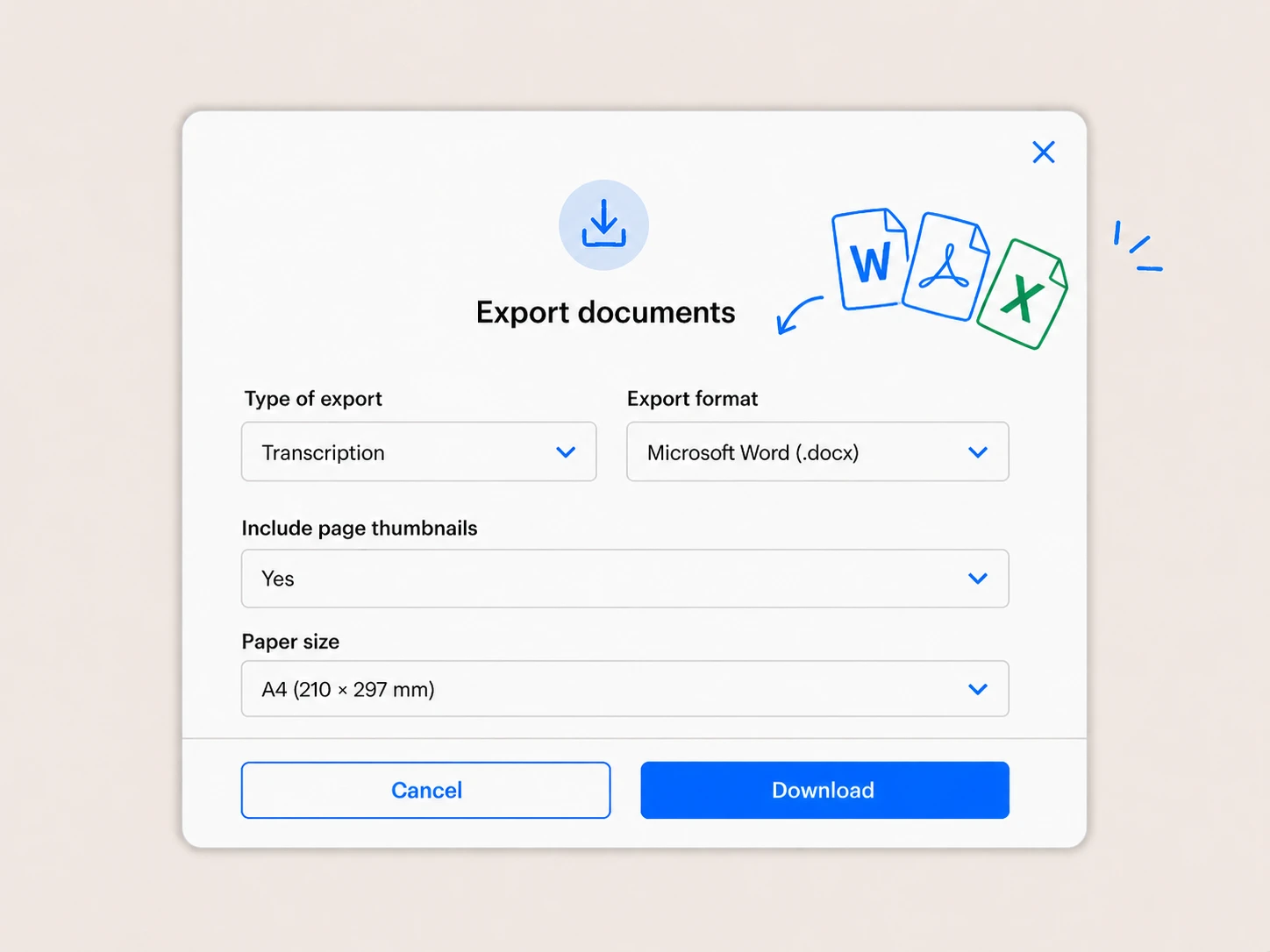
3 Download editable text in Word, Markdown, or plain text, then search a name or a date across an entire collection and share passages family can actually read.
Why families choose Handwriting OCR
Most OCR was built for clean printed text. Handwriting OCR reads real, personal handwriting accurately, keeps it private, translates where you need it, and hands back searchable text in seconds.
Reads connected cursive, faded ink, and a hand that changed over the years, including writing you can no longer read yourself, so the names, dates, and stories come through as written.
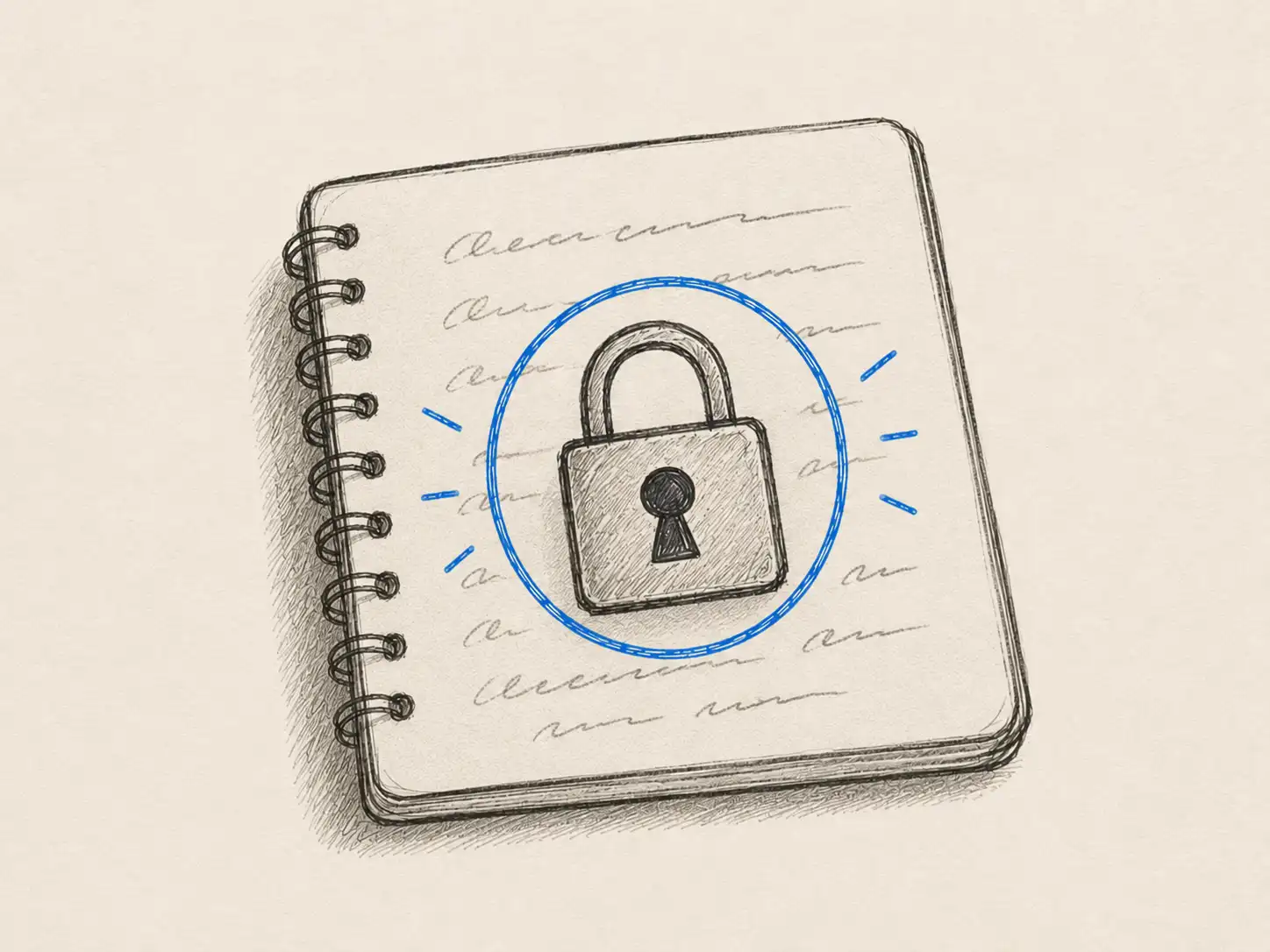
Your letters and diaries are encrypted and processed only to return your results. Nothing is shared and nothing is used to train AI models, so intimate family detail stays private.
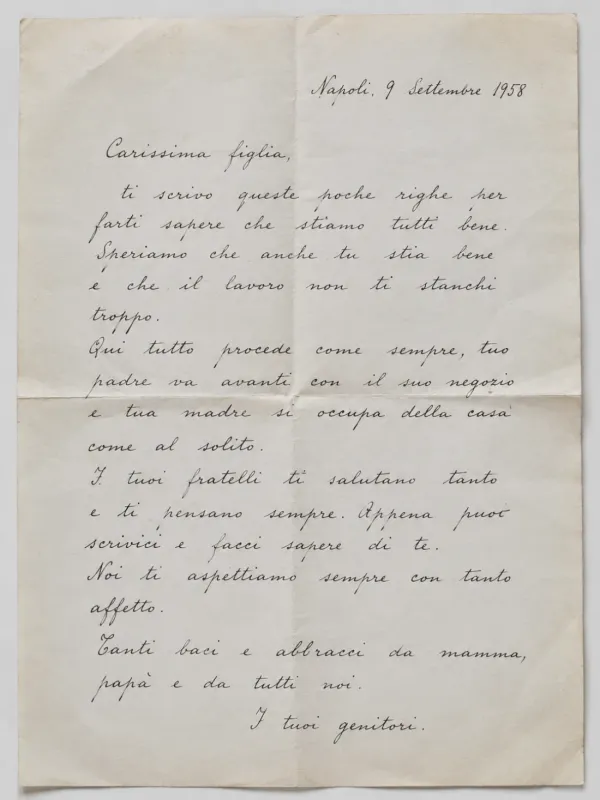
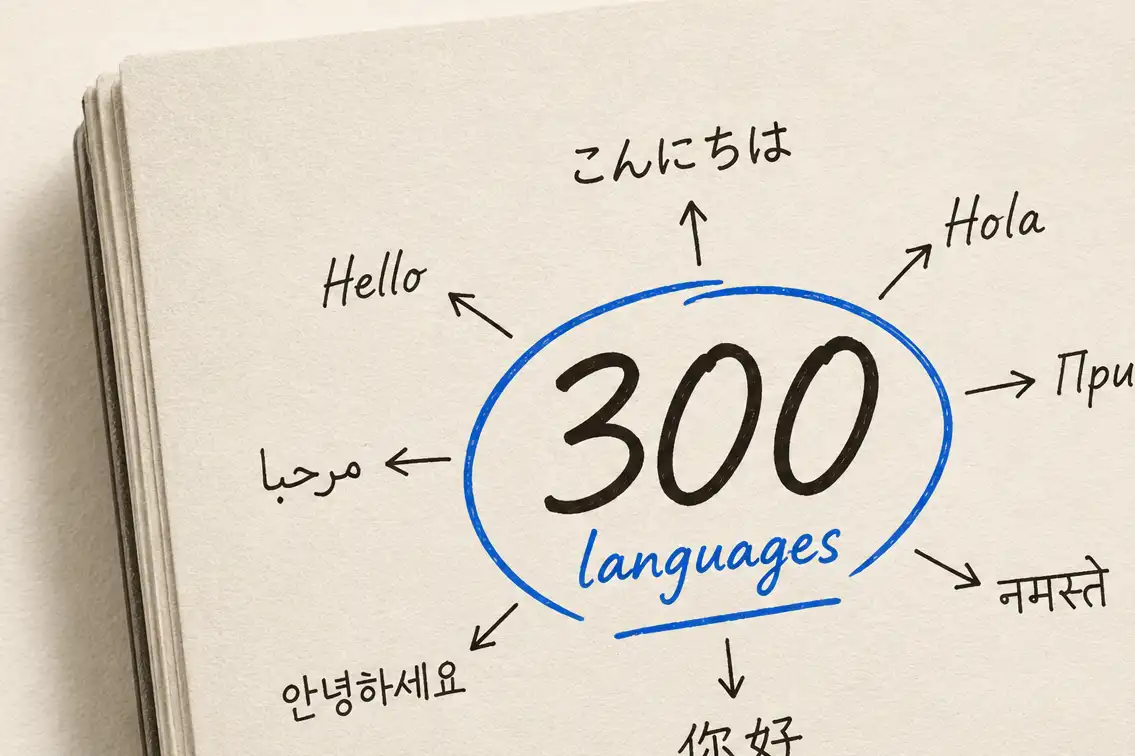
Turn an old French, German, or Italian family letter into readable English in the same step, so a language barrier no longer keeps part of your family story out of reach.
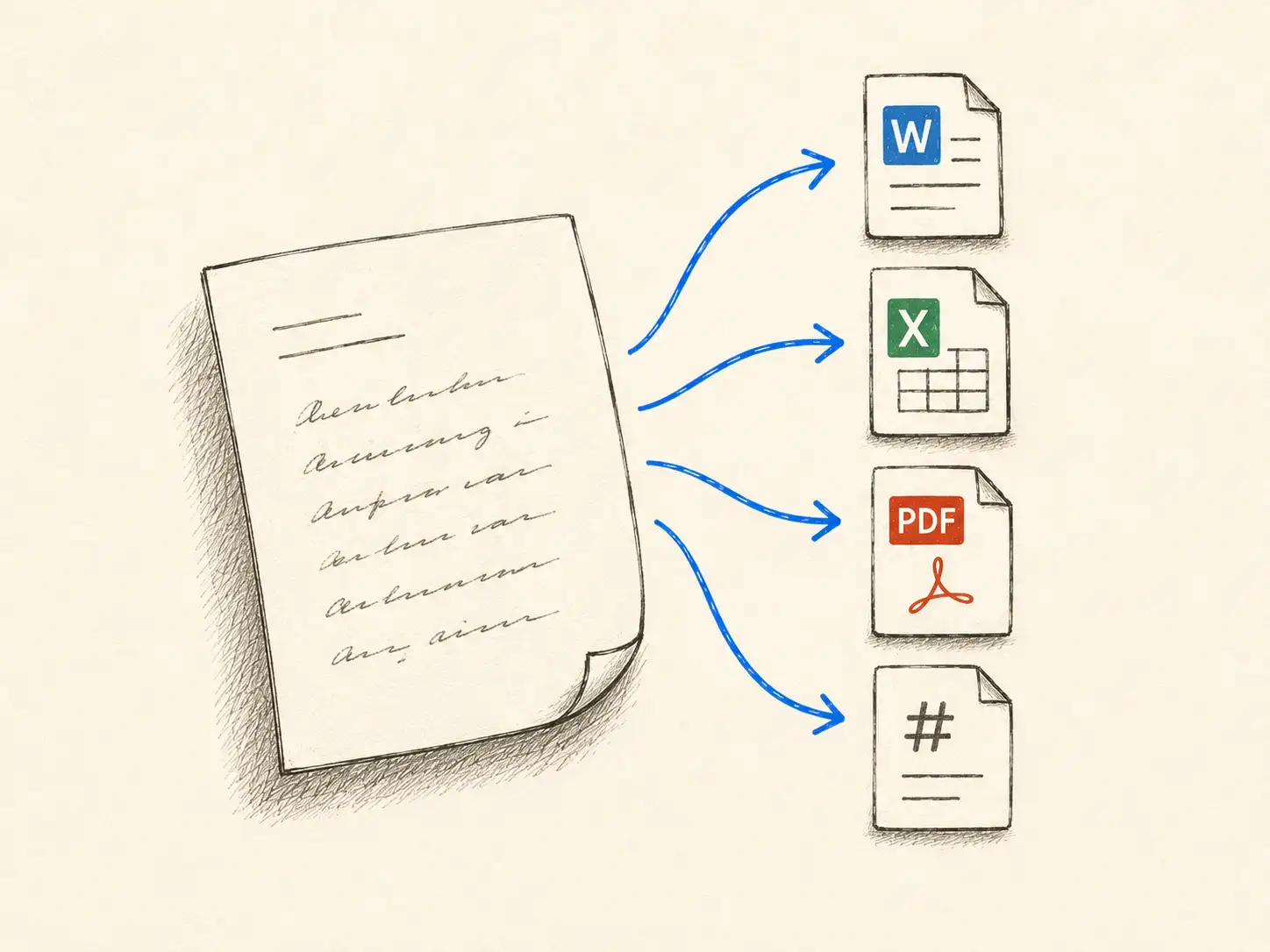
Get clean, searchable text out in seconds as Word, Markdown, or plain text, then search a name or a date across decades of diaries and share passages everyone can read.
Letters & correspondence
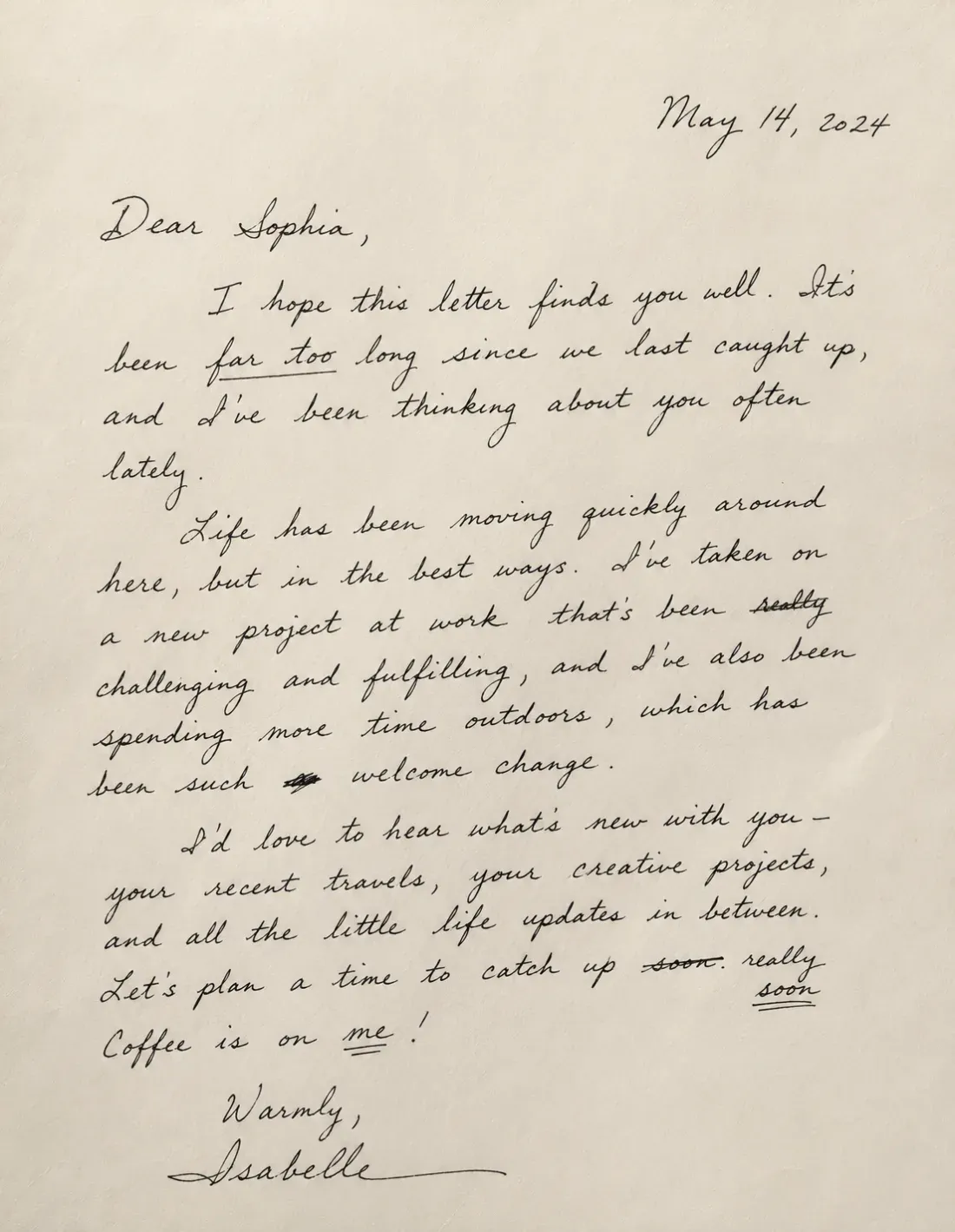
Turn letters into searchable text, from a box of inherited airmail to the note a friend sent last month. Faded ink and connected cursive come through as written, so the words are no longer locked in the handwriting.
Diaries & journals
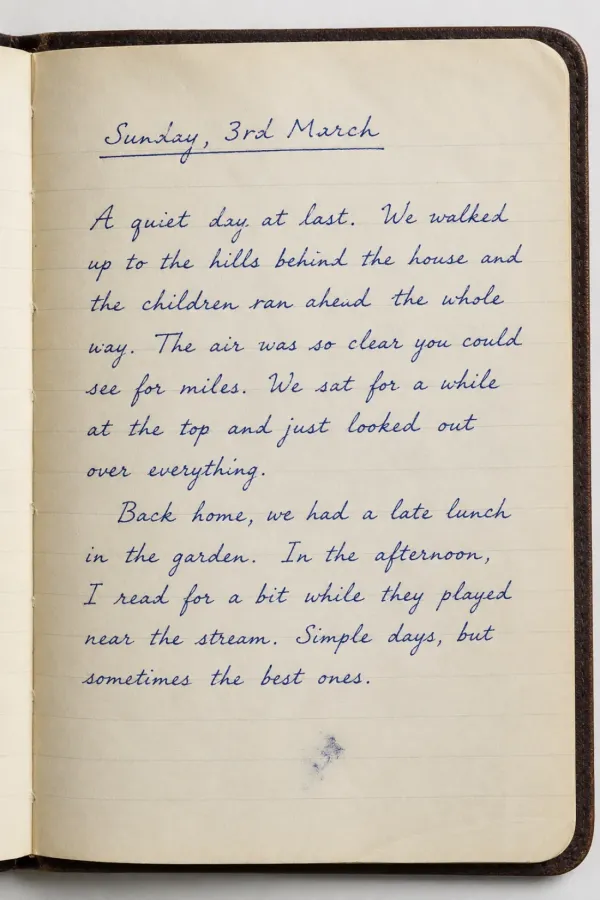
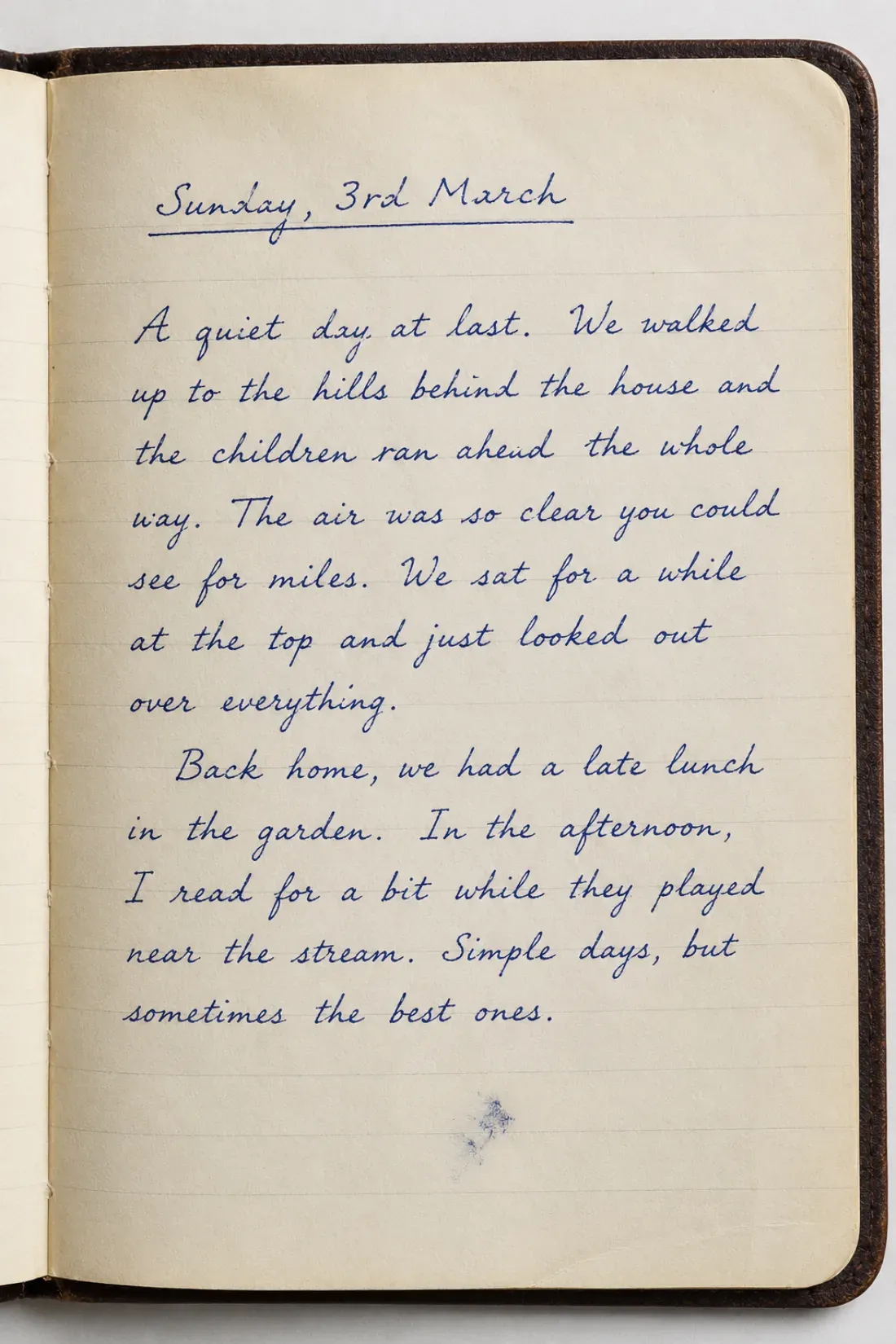
Make diaries and journals searchable, whether they span decades of changing handwriting or the journal you wrote in this morning. Each page is read on its own, and dated entries and paragraph breaks stay in place.
Recipes & keepsakes
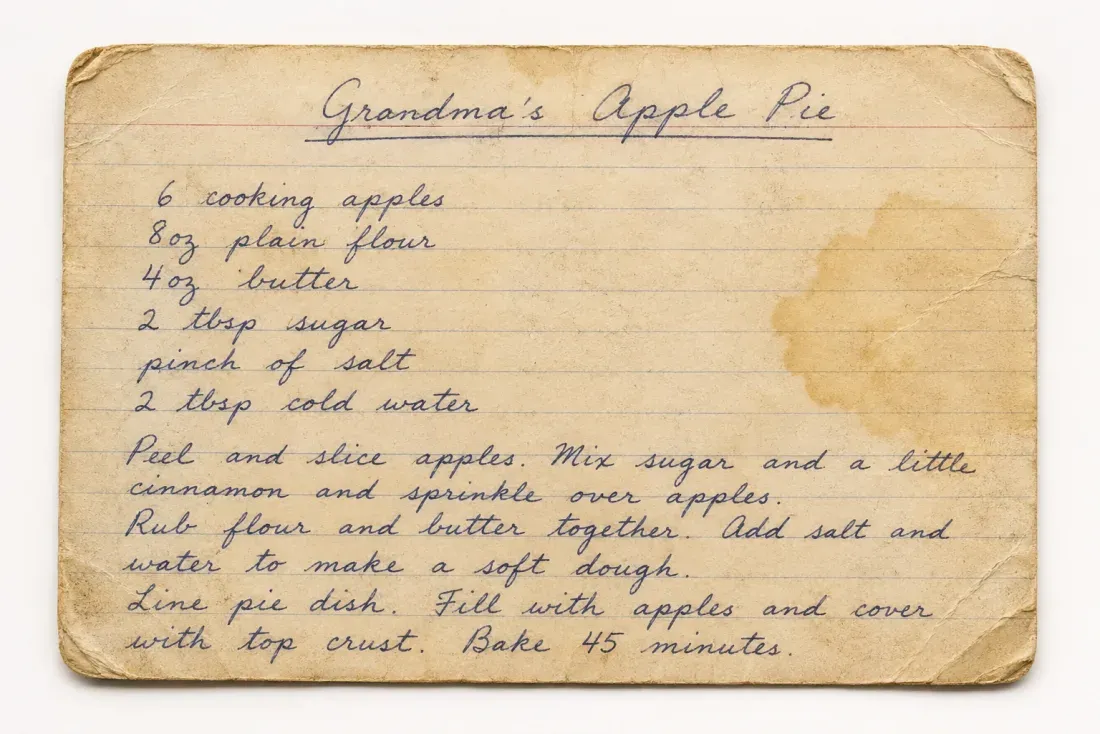
Capture handwritten recipe cards, greeting cards, and keepsakes before the ink fades any further. The measurements and notes are transcribed as written, so a family recipe can be shared, printed, and passed on.
Notes & notebooks
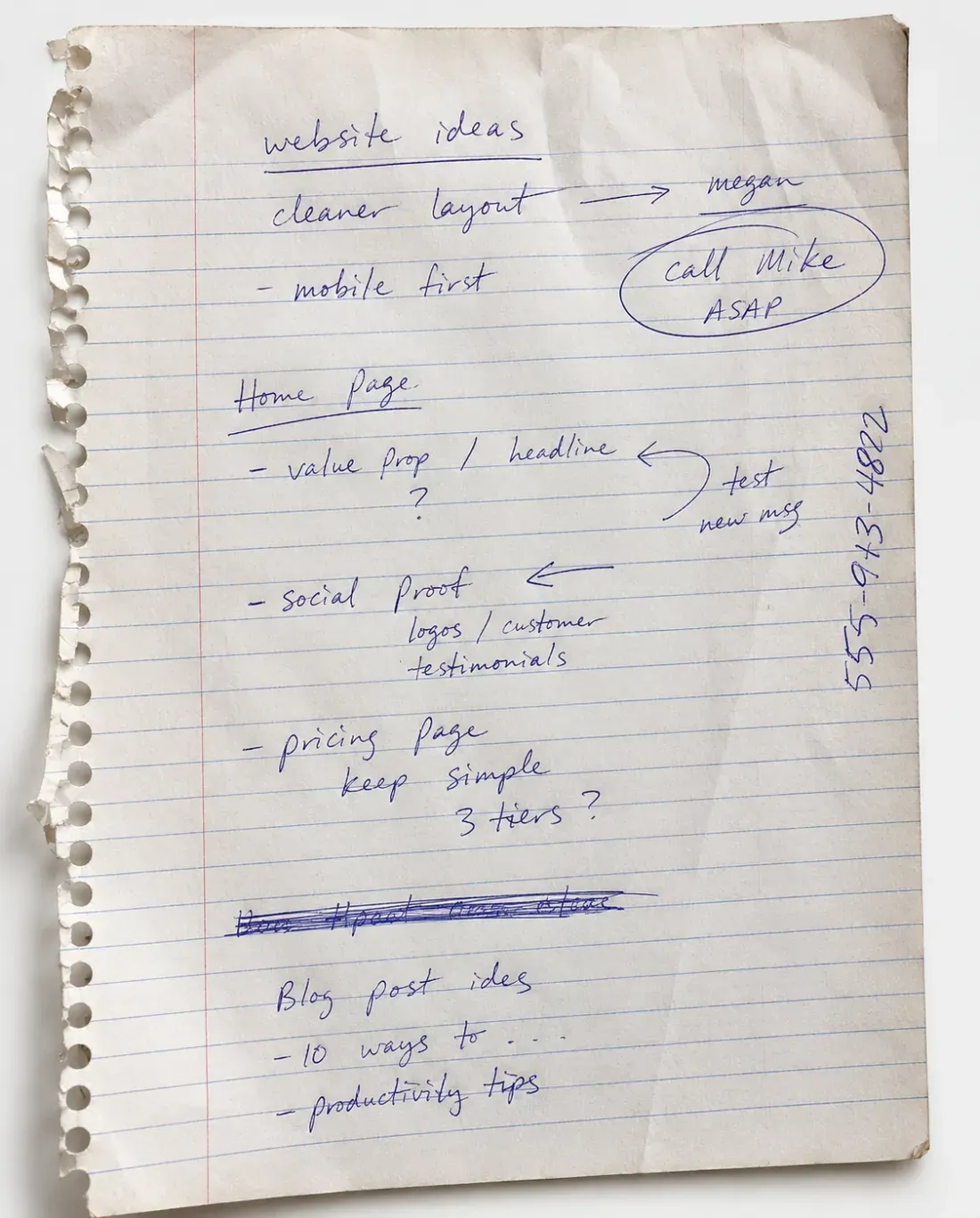
Turn everyday handwriting into editable text: meeting notes, to-do lists, journals, and the ideas you scribble down, right through to longer projects like a memoir or a whole handwritten book. Whole pages transcribe in seconds rather than hours of retyping.
Pricing
Pay-as-you-go credits or monthly subscriptions. Cancel any time.
No commitment
One-time purchase. Valid for 1 year.
250 pages / month
Billed monthlyBilled annually
1,000 pages / month
Billed monthlyBilled annually
10,000 pages / month
Billed monthlyBilled annually
Credits never expire while your subscription is active, and your documents are never used to train our models.
For higher volumes, dedicated instances, offline deployment, or any other custom requirements, see Handwriting OCR for Enterprise or contact us.
FAQ
Any other questions? Get in touch and we'll answer right away.
Handwriting OCR is an AI service that turns handwritten documents into accurate, searchable, editable text. Unlike traditional OCR, which was built for printed text, it is built specifically for handwriting, including cursive, faded ink, historical scripts, and many languages, and it can translate non-English records into English in the same step. Upload a scan or photo and you get back clean text you can search, edit, and export to Word, Markdown, or plain text.
Handwriting OCR was founded in London in 2023, dedicated to applying modern AI to read the hardest handwritten documents: the cursive, faded, and historical pages that traditional OCR cannot handle. We are a small, independent UK team, the people who build the product also handle support, and we never use your documents to train models or share them with anyone.
Yes. Everyday note-taking is one of the most common uses: meeting and lecture notes, to-do lists, jotted ideas, and the journals and notebooks you keep now. Handwriting OCR reads quick, messy, everyday handwriting and returns editable text that keeps lists, headings, and structure, so a stack of notebooks becomes something you can search, edit, and summarize instead of retyping. It handles a single page or thousands just the same.
Yes. Handwriting OCR is built for diaries and journals written in cursive, including ones spanning decades where the handwriting changed over time, as well as the journal you keep today. Each page is read independently, so the system adapts to a careful early entry and a rushed later one alike. People routinely digitize diaries that run to thousands of pages across many years. Accuracy depends on the clarity of the writing and the scan, but most personal diaries process well enough that reviewing the results is far faster than transcribing by hand.
Yes. Old family letters are one of the most common things people bring to us, including airmail and wartime correspondence, and a grandparent's shaky later hand. Handwriting OCR reads connected cursive and faded ink and returns the text as written. Very faded or damaged passages may need a check against the original, but even then it captures readable text from letters that are getting harder to read with every year.
Yes. Handwriting OCR can transcribe a handwritten letter in French, German, Italian, Polish, and many other languages and translate it into readable English in the same step. This is one of the most-loved things about it for family history: a letter from a grandparent that no one in the family could read becomes something everyone can. As with all handwriting, accuracy depends on the clarity of the original, so testing a sample page is the best guide for your letters.
Yes. Large projects are normal here, from a 25-year diary to several thousand letters to an entire handwritten book. You can upload multi-page PDFs and process in batches, and whole pages transcribe in seconds rather than the hours manual typing would take. Plans come with page credits, and for very large projects you can buy more credits or pay as you go, so you can size it to the project in front of you.
They stay private. Your documents are encrypted in transit, processed only to deliver your results, never used to train AI models, and never used for training. You also control how soon they are deleted, with auto-delete configurable from 15 minutes up to 14 days. When you are digitizing intimate personal memories, privacy is fundamental, not an optional extra.
No. A smartphone camera works perfectly for photographing diary pages and letters, and a standard flatbed scanner produces higher-quality scans if you prefer. Handwriting OCR processes common formats like JPG, PNG, and PDF without any special equipment. For a fragile diary you can photograph each page once and work entirely from the digital images, with no repeated handling.
For clear handwriting and good scans, accuracy is typically high enough that reviewing the output is far quicker than transcribing from scratch. We return what is actually on the page rather than a tidied-up guess, so it is always worth checking names, dates, and any passage that matters against the original, especially on very faded ink or rushed entries. The best way to judge it for your own handwriting is to test a few sample pages and see the results.
Yes. Handwriting OCR converts the written portions of each page to searchable text while keeping the overall page structure. Photographs, clippings, doodles, and pressed flowers stay as visual elements in your original scans rather than being turned into text, since they are not text. The handwriting around them becomes searchable, which is exactly how most people work with scrapbook-style diaries and journals.
Often, yes, including handwriting people tell us they can no longer read themselves. Handwriting OCR extracts what is actually written rather than what it means, so if you abbreviated a name to an initial or used personal shorthand, the output shows it exactly as written. That preserves your original conventions and makes them searchable, while interpreting what a particular shorthand refers to still relies on your own knowledge of the family context.
Try it on your own documents
Upload a single letter, a diary page, a recipe card, or a page of notes and see how the transcription compares to typing it out by hand. Your documents stay private and are never used to train models.
No card needed. Your documents are never used to train our models.
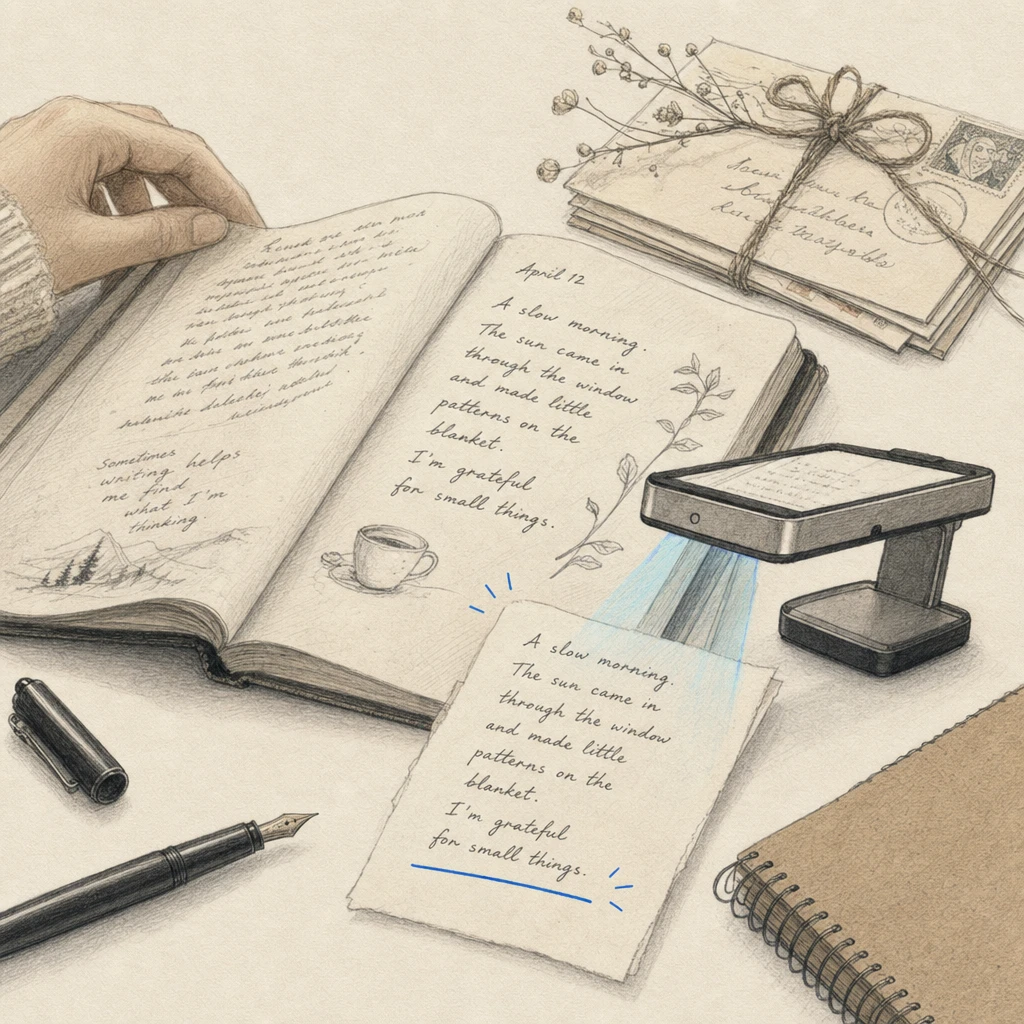
Our experience
Personal documents are one of the most popular things people bring to our handwriting OCR, and they are not all heirlooms. Every week our handwriting recognition models read tens of thousands of letters, diaries, journals, and notes, some written generations ago and some written this week, and because they keep improving, the results get better over time.
A handful of things come up again and again:
Much of it isn’t in English. French, German, Italian, Polish, and more all come up regularly, which is why transcription and translation work side by side: you can turn an old foreign-language family letter into readable English in the same step.
People rarely arrive with one page. It is common to digitize a 25-year diary, a parent’s run of journals, or several thousand letters at once. Whole pages transcribe in seconds rather than the hours manual typing would take, which is what makes a project that once felt impossible actually finishable.
Diaries and old letters are usually cursive, sometimes a hand that changed over decades. See how our cursive translator handles real letters, errors and all.
Everyone’s handwriting is different, so the only real test is your own. Try it on a page or two of your hardest handwriting before committing to a larger project, with free trial credits and no card required.