
Quick Takeaways
- Personal letters contain irreplaceable family stories written in your ancestors’ own authentic voice
- Old cursive handwriting, faded ink, and deteriorating paper make letters difficult to read and fragile
- Handwriting OCR converts letters to searchable digital text while preserving the originals
- Digitization protects against loss and makes it easy to share family stories with relatives
- Your private family correspondence remains completely private throughout the conversion process
You have a box of letters written by your grandmother, or wartime correspondence from a great-grandfather you never met. The handwriting is beautiful but difficult to read. The ink has faded. The paper feels fragile in your hands. These letters hold family stories that exist nowhere else, written in voices you want to preserve.
But reading cursive handwriting from decades ago takes patience and practice. Sharing these letters with family means risking damage to the originals. And finding specific stories or references means reading through every letter hoping you recognize what you’re looking for.
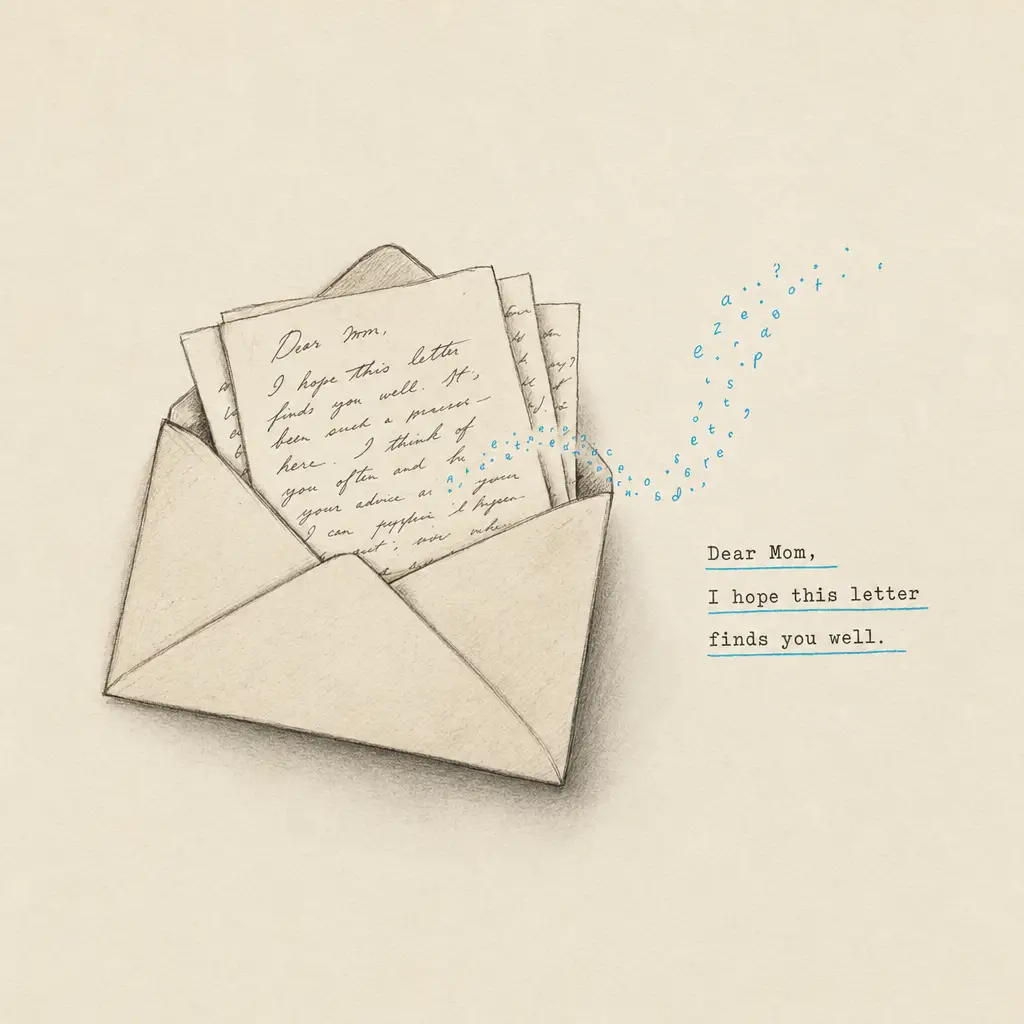
Handwriting OCR converts handwritten letters and correspondence into searchable digital text. Your family’s authentic voices become readable and shareable while the original letters stay protected. The stories your ancestors wrote remain accessible for generations to come.
Why Family Letters Are Treasure Worth Preserving
Letters aren’t formal documents. They’re personal conversations captured on paper, written by people sharing their lives with those they cared about.
The Authentic Voice of Your Ancestors
When you read a letter your grandmother wrote, you’re hearing her voice. Not a story someone else told about her, but her own words describing her experiences, her feelings, her daily life. Letters reflect ancestors’ thoughts and experiences in their own words, providing a rare personal connection missing from other historical records.
Wartime correspondence holds especially powerful testimony. Soldiers writing home shared details that might otherwise be lost from memory. Love letters reveal emotional landscapes that official records never capture. Family letters discuss ordinary moments that became precious with time.
These aren’t polished memoirs written for publication. They’re honest communications between people who mattered to each other. That authenticity makes them invaluable for understanding who your ancestors really were.
Stories That Don’t Exist Anywhere Else
A census record tells you where someone lived. A letter tells you why they moved there, what they thought about it, who helped them settle in. Birth certificates document events. Letters describe the joy, the worry, the everyday reality surrounding those events.
Family letters often contain the only existing record of certain stories, relationships, or perspectives. When you lose the letters, you lose those stories permanently. Nobody alive remembers the details your great-grandmother wrote about in 1945. The letters are the only source.
Letters are more personal than books, preserving family collections that capture intimate details of lived experience.
Genealogists value letters because they add depth and humanity to family trees. Names and dates tell you facts. Letters tell you stories.
Emotional Connection Across Generations
Reading words someone wrote by hand creates connection that digital communication doesn’t match. You see their handwriting. You notice where they paused, what they emphasized, how they signed their name. The physical act of writing makes the person feel present.
For family members who never met a particular ancestor, letters offer direct access to that person’s voice and personality. Grandchildren can know their great-grandparents through the letters they wrote, hearing stories and perspectives they couldn’t get any other way.
The Challenge of Reading and Preserving Old Letters
Family letters present unique preservation challenges that make digitization both difficult and necessary.
Cursive Handwriting and Historical Writing Styles
Most old letters were written in cursive. Many people today never learned to read cursive fluently, making these letters effectively inaccessible without help. Even those comfortable with cursive face challenges with historical handwriting styles that used letter formations different from modern writing.
Individual handwriting varies widely. Some ancestors wrote clearly. Others had hurried or stylized handwriting that’s difficult to decipher even for experienced readers. Lowercase letters that look similar can be easily confused. Abbreviations and period-specific phrases add another layer of complexity.
Family letters written in the 1800s might use letter forms you don’t recognize. Mid-1900s correspondence might feature unfamiliar cursive styles. Each era and each individual presents its own reading challenges.
Physical Deterioration of Paper and Ink
Paper doesn’t last forever. Acid in older paper causes yellowing and brittleness. Ink fades, especially when exposed to light. Letters stored in attics or basements face temperature extremes and humidity that accelerate deterioration.
Some letters are already showing damage. Pages torn at the folds. Ink so faded it’s barely visible. Paper so fragile you’re afraid to unfold it. Every time you handle these letters, you risk causing more wear.
| Manual Transcription | OCR Conversion |
|---|---|
| Requires reading cursive fluently | Handles cursive handwriting automatically |
| Must handle originals repeatedly | Scan once, preserve forever |
| Weeks to transcribe large collections | Hours to process hundreds of letters |
| One copy unless you retype it | Easy to share digital files with family |
Water damage, fire, accidents, and simple aging threaten letters constantly. Once they’re gone, there’s no recovery.
Keeping Letters Safe While Making Them Accessible
You want to preserve these letters, but you also want family members to be able to read them. Passing around the originals risks damage. Making photocopies works but doesn’t solve the cursive reading problem. Typing everything manually takes enormous time and effort.
The challenge is creating access without compromising preservation. You need a way to make the content readable and shareable while keeping the physical letters safe from harm.
How Handwriting OCR Works for Personal Letters
Converting handwritten letters to digital text uses technology specifically designed to recognize varied cursive handwriting styles from different time periods.
Converting Cursive and Historical Handwriting
OCR technology for handwriting processes scanned images of your letters, recognizing individual words and converting them into editable, searchable digital text. The system handles cursive writing, varied letter formations, and the unique characteristics of historical handwriting.
This isn’t perfect. Some words might be misread, especially if the handwriting is particularly difficult or the ink has faded significantly. But converting handwriting to text gives you searchable content that captures the majority of what was written, which is far more useful than images you can’t search.
The technology works best with reasonably clear handwriting, but it can process faded ink, aged paper, and varied cursive styles. Accuracy improves with better source images, so good scans or photos of your letters help.
Handling Fragile and Faded Documents
Digitization begins with creating images of your letters. You can photograph them with a smartphone, use a flatbed scanner, or work with a professional service experienced with fragile documents. The goal is capturing readable images without causing damage.
Once you have digital images, OCR processes them to extract the text. This means you only need to handle the physical letters once for scanning. After that, you work with digital copies while the originals stay safely stored.
For extremely fragile letters, professional scanning services use specialized equipment and techniques that minimize handling and stress on delicate paper. They can work with documents too fragile for you to scan safely yourself.
Privacy for Personal Family Correspondence
Your family letters are deeply personal. They contain private thoughts, personal stories, and intimate family matters. Uploading them anywhere raises legitimate privacy concerns.
Your letters remain completely private. The files are processed only to deliver your converted text and are not used to train AI models or shared with anyone. Your family’s private correspondence stays private.
Your personal letters remain private and are processed only to deliver your results.
After processing, you receive digital text files. These belong to you entirely. You can store them locally, share them with family as you choose, or keep them completely private. Nothing is retained or reused beyond completing your conversion.
From Envelope to Digital Archive
The process of digitizing family letters preserves both the visual appearance and the textual content.
Preparing and Scanning Your Letters
Start by organizing your letters. Group them by correspondent, by date, or however makes sense for your collection. This organization helps when you’re creating your digital archive.
Create high-quality scans or photographs of each letter. Photograph both the envelope (which often contains dates, addresses, and postmarks) and the letter itself. Unfold letters carefully if they’ve been stored folded. Use good lighting to ensure the handwriting is clearly visible in your images.
For letters in fragile condition, consider professional scanning services. They have experience with delicate materials and can create preservation-quality digital images without risking damage to your originals.
The Conversion Process
Once you have images of your letters, upload them to an OCR service. The system processes each page, recognizing the handwriting and converting it to searchable text. This happens automatically without manual typing.
The conversion gives you both the visual images (showing the original handwriting) and the extracted text (making the content searchable). You can read the letters in their original form or search the text to find specific references quickly.
Processing time depends on how many letters you have, but OCR conversion is much faster than manually transcribing everything yourself. A collection that would take months to type can be converted in days or less.
Organizing Your Digital Letter Collection
After conversion, organize your digital archive in a way that serves your family’s needs. You might organize by correspondent, by year, by family branch, or by topic. The digital format gives you flexibility the physical letters never allowed.
Include metadata with your letters when possible. Note who wrote to whom, approximate dates, and any context that helps understand the letters. Future generations will appreciate this additional information.
Back up your digital collection in multiple locations. Keep copies on your computer, an external hard drive, and a secure cloud service. This redundancy protects your family’s stories just as digitization protected them from physical loss.
What You Gain From Digitized Family Letters
Searchable digital letters unlock possibilities that physical letters alone can’t provide.
Sharing Family History Across the Family
Digital copies let you share letters with siblings, cousins, and extended family without risking the originals. Each family member can have complete copies of letters written by shared ancestors. Grandchildren can read what their great-grandparents wrote without needing to visit the relative who holds the physical letters.
You control what you share and with whom. Maybe some letters are private, while others tell stories the whole family should know. Digital files make selective sharing practical.
Family members scattered across different locations can all access the same letters. You’re no longer limited by geography or by who physically holds the collection.
Finding Specific Stories and References
With searchable text, you can find every mention of a specific person, place, or event across hundreds of letters in seconds. Want to know everything your grandmother wrote about her sister? Search the name. Curious about family experiences during a particular historical period? Search related terms.
This searchability transforms occasional sequential reading into active exploration. You can trace relationships, track life events, and follow story threads across multiple correspondents and time periods.
The stories are still in your family’s authentic voices, still in their own words. But now they’re accessible when you want them instead of buried in boxes you’d need hours to search.
Creating Legacy Documents for Future Generations
Digitized letters let you create curated collections for specific purposes. Compile all the wartime correspondence. Gather letters between particular family members. Create themed collections around major family events.
You can combine letters with photos, documents, and your own annotations to create rich family history resources. The letters provide the voices and stories. You provide the context that helps future generations understand them.
These legacy documents preserve not just the letters themselves but the family stories and connections they represent. Generations from now, your descendants will be able to read words their ancestors wrote, in searchable format with context that helps them understand.
Preserving Your Family’s Authentic Voice
Family letters hold stories that exist nowhere else, written by people whose voices deserve to be preserved. When those letters exist only on paper, they remain vulnerable to deterioration, difficult to read for those unfamiliar with cursive, and challenging to share with family.
Digitizing personal handwriting creates searchable text that makes your family’s words accessible while protecting the originals from further handling. You can share stories across the family, find specific references instantly, and ensure these voices remain audible for generations to come.
The technology handles cursive writing, faded ink, and aged paper. Your deeply personal family correspondence stays completely private throughout the process. Nothing is shared, reused, or retained beyond creating the searchable text you need.
Your family’s letters matter. The voices inside them deserve to be heard. Handwriting OCR provides both preservation and accessibility, converting handwritten pages into digital text that lasts while honoring the originals you treasure.
Try Handwriting OCR with free credits to see how your family letters convert to searchable text. Your private correspondence remains private, and your ancestors’ voices become instantly accessible.
Frequently asked questions
Can OCR read old cursive handwriting in family letters from the 1800s or early 1900s?
Yes, modern handwriting OCR can process cursive handwriting from historical family letters, including styles from the 1800s and early 1900s. The technology is designed to handle varied cursive writing styles and historical letter formations. Accuracy depends on factors like handwriting clarity, ink condition, and image quality, but OCR can successfully convert most old cursive letters into searchable text. Very ornate or highly stylized handwriting may be more challenging, but you'll still get usable results much faster than manual transcription.
What's the best way to scan fragile old letters without damaging them?
For fragile letters, use a flatbed scanner rather than a sheet-fed scanner to avoid mechanical stress on delicate paper. Place letters flat on the scanner bed without pressing down hard. If letters are too fragile to flatten safely, photograph them with a smartphone or camera using good lighting. For extremely delicate or valuable letters, consider professional scanning services experienced with historical documents. They have specialized equipment and techniques for handling fragile materials safely while creating high-quality digital images.
How private are family letters when using OCR services?
Reputable OCR services process your family letters only to deliver your converted text and do not use the content for any other purpose. Your letters should not be used to train AI models, shared with third parties, or retained after you download your results. For maximum privacy with deeply personal family correspondence, choose services that explicitly state they don't store your documents and allow you to delete files immediately after downloading. Always review the privacy policy before uploading sensitive family materials.
Can I organize digitized letters by correspondent or date after conversion?
Yes, you have complete control over how to organize your digitized letters after conversion. You receive digital text files that you can name, folder, and organize however works best for your family collection. Many people create folders by correspondent (all letters from grandmother, all letters between specific family members), by date range, or by family branch. You can also add your own metadata notes to files. The digital format gives you organizational flexibility that physical letter collections can't match.
Will OCR work on letters with faded ink or water damage?
OCR can process letters with faded ink or minor water damage, though accuracy may be reduced compared to letters in pristine condition. The key is creating the best possible scan or photograph of the letter. Use good lighting and high resolution to capture as much visible detail as possible. Very severely faded or damaged sections may not convert accurately, but even partially successful conversion gives you searchable text for the readable portions. This is still much faster and more useful than trying to transcribe badly damaged letters manually.