
Quick Takeaways
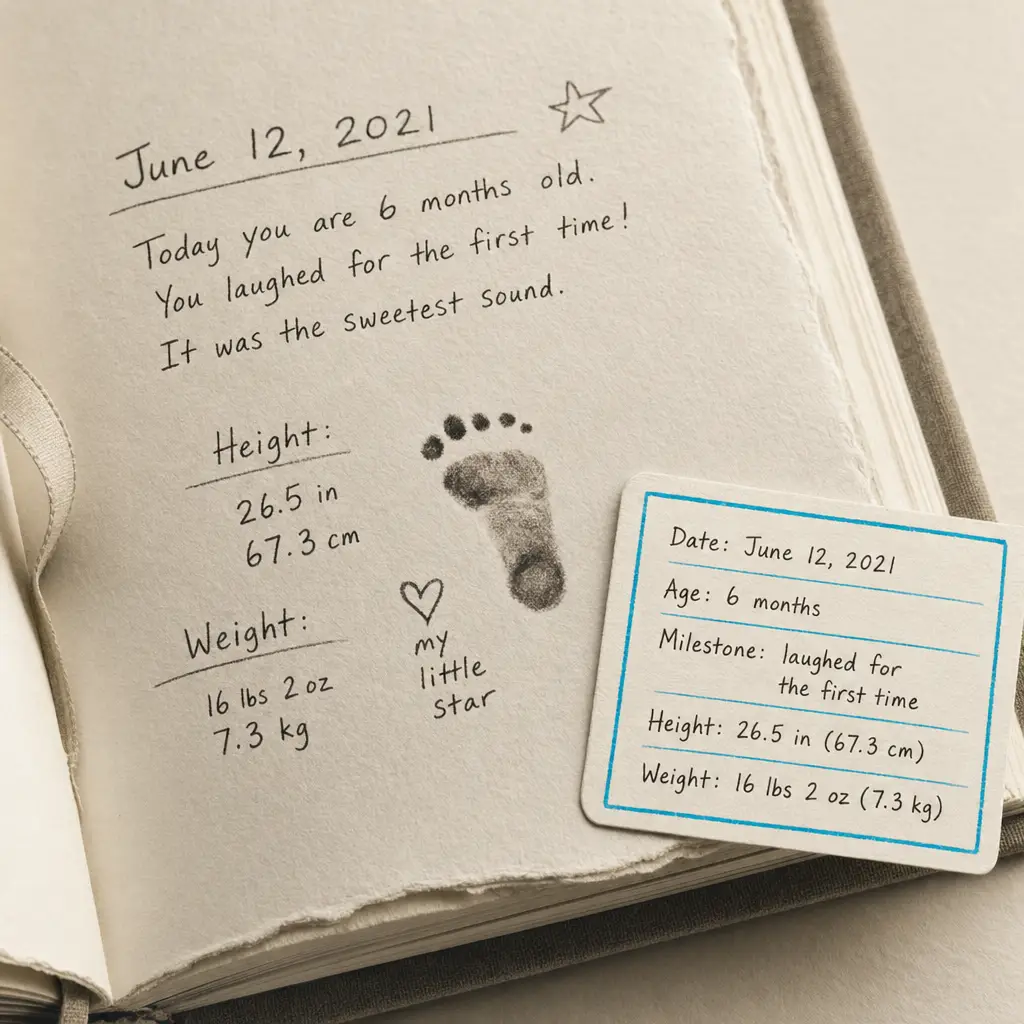
- Baby books contain handwritten records of births, first words, growth milestones, and childhood memories in the handwriting of parents and grandparents
- Handwriting OCR converts these personal records into searchable, editable text while preserving the family stories they document
- Works with various baby book formats including commercial books, family bibles, homemade scrapbooks, and childhood diaries
- Allows families to create searchable digital archives of these fragile records without losing the original emotional connection
- Manual review helps ensure accuracy for dates, names, and milestone details that matter to family history
Baby books represent some of the most intimate family history documentation that exists. They record the small details that official documents miss: the first word a child spoke, the date they took their first steps, how their personality emerged, what made their parents laugh. These records were written in real time by people who were living the moments they documented, often in the distinctive handwriting of mothers and grandmothers who maintained these books across years of childhood.
Unlike official birth certificates or census records, baby books capture family life as it was experienced. They include nicknames that never appeared in formal documents, family stories about how names were chosen, notes about what grandparents said when they met a new baby, records of childhood illnesses and recoveries, observations about temperament and personality that help descendants understand their ancestors as real people rather than names on a chart.
These books are also fragile. The paper yellows, bindings deteriorate, and handwriting fades over decades. Many families have baby books stored in attics or closets, valuable but increasingly difficult to read and vulnerable to damage. The information they contain exists nowhere else. If the book is lost or becomes unreadable, those specific family memories disappear.
This page explains what handwriting OCR can do with baby books and childhood records. It’s designed to help families understand whether digitizing these materials makes sense for preservation, how the process works with handwritten milestone records, and what to expect when converting personal family documentation into searchable digital format.
Why Baby Books Matter to Family History
Baby books occupy a unique position in genealogical research. They’re not official documents, but they contain details that official records never capture. Understanding their value helps explain why preserving them matters and why handwriting OCR represents a practical preservation approach.
Primary Source Documentation
Baby books are primary sources created at the time events occurred. When a mother records “First tooth - August 12, 1932” in a baby book, she’s documenting that event contemporaneously. This makes baby books more reliable than memories recorded decades later or family stories passed down through generations.
These contemporary records help verify dates, clarify relationships, and provide context that other sources lack. A baby book might record which grandparents were present for a birth, what middle name was chosen and why, or which aunt helped care for the baby during an illness. This information helps genealogists understand family networks and relationships that don’t appear in census or vital records.
Handwriting as Family Connection
The handwriting itself carries meaning in baby books. Recognizing a grandmother’s distinctive hand creates connection across generations. Descendants see how carefully someone wrote out birth details, notice where handwriting changed as new people added entries, observe the care taken in recording milestones.
This emotional connection matters when family records are being preserved and shared. Digitizing the text content makes it searchable and accessible, but being able to refer back to the original handwritten pages maintains the personal quality that makes these records meaningful beyond their factual content.
Details Missing from Official Records
Official birth records contain basic facts: date, location, parents’ names. Baby books contain the surrounding story. They record who visited the hospital, what gifts were given, what concerns parents had, how siblings reacted to a new baby, what developmental milestones arrived early or late.
For descendants researching family history, these details bring ancestors to life. A census record shows a child lived in a household. A baby book shows who that child was, what their personality was like, what their family noticed about them. This distinction makes baby books valuable beyond their genealogical utility; they’re windows into lived family experience.
Common Content in Baby Books
Baby books vary widely in format and content, but most include several standard types of information:
- Birth details: Date, time, place, weight, length, delivery information
- Name information: Full legal name, how it was chosen, family naming traditions followed
- Family tree pages: Parents, grandparents, siblings listed with dates and places
- Milestone tracking: First smile, first tooth, first words, first steps, and similar developmental markers
- Growth records: Weight and height measurements tracked over time, often in table format
- Medical notes: Childhood illnesses, vaccinations, doctor visits
- Firsts and memories: First haircut, favorite toys, funny things said, personality observations
- Photos and mementos: Usually not text, but context for understanding written entries
- Special events: Holidays celebrated, visitors who came, family gatherings attended
Challenges Specific to Baby Book Handwriting
Baby books present unique challenges for handwriting recognition that differ from other genealogical documents. Understanding these challenges helps set realistic expectations about what OCR can achieve with these personal family records.
Multiple Handwriting Styles
Unlike census records written by a single enumerator or ship manifests completed by one clerk, baby books often contain entries from multiple family members. The primary keeper, usually the mother, might write most entries. But fathers, grandparents, aunts, or older siblings sometimes add notes. A single page might contain three different handwriting styles.
Each person wrote in their natural hand without concern for consistency or legibility to future readers. These were personal records, not official documents. The writing ranges from carefully formed entries made when the book was new to rushed notes scribbled between diaper changes.
Handwriting OCR processes each section based on its own characteristics rather than expecting uniform style. This means the technology can handle books with multiple contributors, though accuracy may vary between sections written by different hands.
Informal Writing and Abbreviations
Baby book entries were written informally. Parents abbreviated freely, used nicknames, employed personal shorthand that made sense to them but might be unclear to others. A mother might write “Wt: 8-3” for weight, “Dr. M checked ears” for a medical visit, or “Gr’ma B visited” for a family event.
This informal style differs from the standardized formats common in official records. Census forms had specific fields and expected formats. Baby books had blank pages where people wrote however they wished. The resulting text is more conversational and less structured.
OCR processes this informal writing by extracting what’s actually written. Abbreviations come through as abbreviations. Nicknames appear as used. This means you get authentic text that preserves the original voice, but you may need to interpret some shorthand based on family knowledge.
Varying Writing Quality
The physical quality of handwriting in baby books varies dramatically within the same book. Early entries, often made before birth or immediately after, tend to be carefully written. Parents had time, the book was new, the moment felt important.
Later entries show different patterns. Busy parents made quick notes between other responsibilities. Handwriting becomes more rushed. Spacing gets irregular. Some milestone dates are recorded precisely while others are estimated or left blank to be filled in later and never completed.
This variation in writing quality within a single book means that some pages will process more cleanly than others. Pages with careful, deliberate handwriting typically produce more accurate text than pages with hurried notes. Both are valuable, but expectations should adjust to the visible quality of the source material.
Fading and Physical Deterioration
Baby books age like other family documents, but they face particular preservation challenges. They were handled frequently, sometimes by children themselves. Pages show wear from repeated viewing. Bindings deteriorate from being opened and closed many times.
The ink or pencil used varies. Some entries were made with fountain pens that have aged well. Others used pencils that have faded. Ball point pen from mid-century books sometimes bleeds through pages. The paper itself yellows, and if books were stored in attics or basements, they may show water damage, foxing, or other deterioration.
Handwriting OCR is designed to work with aged documents, but severely faded entries or pages with substantial damage will process less accurately. This is where processing creates value even with imperfect results; partial text extraction from a deteriorating page is better than losing that information entirely as the original continues to degrade.
What Handwriting OCR Handles in Baby Books
Understanding what handwriting OCR can reliably process in baby books helps families decide which materials to digitize and what results to expect from different types of content.
Structured Milestone Records
Many baby books include structured sections with repeated formats: milestone tracking pages, growth charts, vaccination records. These sections follow consistent patterns even when handwriting varies.
A milestone page might list standard firsts: “First smile,” “First tooth,” “First word,” with dates filled in next to each. A growth chart has months or ages listed with weight and height recorded. Vaccination records name specific vaccines with administration dates.
This structured content processes well because the format provides context that helps OCR understand handwriting. Even if individual letters are ambiguous, the structure clarifies meaning. A number next to “Weight at 6 months” is probably a weight measurement. A date next to “First steps” is probably when the child first walked.
Handwriting OCR leverages this contextual structure when processing baby books. The extracted text maintains the structured format, making it easy to locate specific milestones and transfer information into family databases or research notes.
Narrative Entries and Observations
Many baby books include narrative sections where parents wrote about their child’s personality, funny things they said, or memorable moments. These entries are more challenging because they lack the structural context of milestone records.
Handwriting in narrative sections is often more informal. Parents wrote in their natural hand without careful letter formation. They used run-on sentences, personal abbreviations, and assumed context that might not be clear to someone reading decades later.
Despite these challenges, narrative content is often the most valuable material in baby books. These are the stories that bring family history to life. A mother’s note about how her three-year-old insisted on wearing rain boots every day or a father’s observation about his daughter’s determination reveals personality in ways that milestone dates never could.
Handwriting OCR extracts these narratives as continuous text, preserving the conversational voice of the original entries. Some words may need verification against the original page, particularly personal names or family-specific terms, but the extracted text captures the story in a searchable, preservable format.
Names and Relationships
Baby books typically include detailed name information: full legal names, nicknames used, how names were chosen, which family members the child was named after. They also include family tree pages listing parents, grandparents, siblings, and sometimes extended family.
Names are critical for genealogical research, and baby books often provide the definitive source for nickname usage and naming traditions. Official records might list “Margaret,” but the baby book records that she was always called “Peggy” and was named for her maternal grandmother Margaret Ann Williams.
Handwriting OCR extracts these names as written, including the context surrounding them. This means you get both the formal name and the family story about how it was chosen, all in searchable text. This is particularly valuable when researching family members who went by nicknames that don’t appear in official records.
Dates and Timeline Information
Baby books contain extensive date information: birth date and time, milestone dates, medical appointment dates, dates of special events. These dates help genealogists establish timelines and verify information from other sources.
Date formats in baby books vary. Some people wrote “January 15, 1945,” others used “1/15/45,” some abbreviated “Jan 15, ‘45.” Handwriting OCR extracts dates as written, preserving the original format. You can then standardize dates in your research database while maintaining the authentic original.
Timeline accuracy matters in genealogical research. If a baby book records a birth date that differs slightly from a birth certificate, that discrepancy might indicate an error in official records or clarify which date is correct. Having searchable text makes it easier to identify these discrepancies and investigate their significance.
Realistic Expectations for Baby Book Processing
Baby books vary enormously in condition, handwriting quality, and content organization. Setting appropriate expectations helps families understand what results they’ll get from different types of baby book materials.
| Baby Book Element | Typical OCR Performance | What to Verify |
|---|---|---|
| Pre-printed forms with handwritten entries | High accuracy on structured fields | Names spelled unconventionally, abbreviated milestone descriptions |
| Carefully written birth details and family tree pages | Very reliable for names and dates | Maiden names, middle names, place name spellings |
| Growth and milestone tracking tables | Accurate numeric data extraction | Units of measurement, date formats, age notations |
| Narrative observations and memory entries | Good text extraction with natural voice preserved | Family nicknames, personal references, rushed handwriting sections |
| Later entries made hastily | Variable depending on handwriting clarity | Dates that might be estimates, abbreviated notes |
| Pencil entries that have faded | Partial extraction possible | Any details from very faded sections |
| Pages with damage, stains, or significant aging | Text extraction from readable portions | Sections where original is barely legible |
What Processes Reliably
Baby book pages with clear handwriting and good preservation process very reliably. Birth detail pages where parents carefully recorded official information typically produce accurate text. Family tree pages with neat entries for grandparents and extended family extract cleanly. Milestone tables where someone methodically tracked firsts and growth measurements convert well to searchable text.
Content written in ink on quality paper that has been stored properly maintains clarity decades later. Modern baby books from the 1960s forward, if kept in reasonable conditions, generally process with high accuracy. Even older books, if the handwriting was careful and storage conditions good, can produce excellent results.
The structure and format of commercial baby books also helps. Pre-printed prompts and organized sections guide OCR processing by providing context for handwritten entries. A page labeled “First Words” with blanks filled in follows a predictable pattern that helps the technology understand the content.
What Requires Verification
Names need verification not because they’re processed inaccurately, but because accuracy is critical. If a baby book lists grandparents or names a child after an ancestor, getting those names exactly right matters for genealogical research. Even very accurate OCR benefits from human verification when names are involved.
Dates should be checked against other sources when possible. If a baby book records a birth date that matches the birth certificate, that’s confirmation. If dates differ between sources, you’ll want to evaluate which is likely correct. Baby books are primary sources, but they’re not infallible; parents sometimes recorded estimated dates or made errors in the moment.
Faded or partially damaged sections need special attention. If you can barely read text in the original, the OCR extraction represents a best effort but may require interpretation. This is where processing still creates value; even imperfect text extraction gives you a starting point and may capture details that will become completely illegible as the document continues to age.
Personal abbreviations and family shorthand might need interpretation based on family knowledge. If a mother abbreviated a doctor’s name as “Dr. M” or used a family nickname that wouldn’t be obvious to others, you understand the reference in ways that automated processing cannot. The OCR extracts what’s written; you apply family context to understand what it means.
Preservation and Family Sharing
Baby books serve two related but distinct purposes in family history: genealogical research and family connection across generations. Handwriting OCR supports both by making content accessible while maintaining ties to the original handwritten records.
Creating Searchable Family Archives
Converting baby books to searchable text allows families to build personal archives where specific information can be located quickly. Instead of paging through multiple baby books hoping to find when Aunt Sarah first walked or what Grandfather’s nickname was as a child, you can search extracted text across your entire collection.
This searchability becomes increasingly valuable as family collections grow. A family with baby books for multiple generations spanning 80 or 100 years creates a database of childhood memories and milestones that would be nearly impossible to search manually. Digitized text makes all that information accessible.
The extracted text can be organized in whatever format works for your family: a personal research database, a family website, shared documents for relatives, or integration with genealogy software. The content becomes usable rather than merely stored.
Protecting Deteriorating Originals
Baby books stored in homes face ongoing deterioration. Paper continues to age, bindings weaken, handwriting fades. Processing these books now captures their content while it’s still readable, creating a preserved version that won’t degrade further.
This is particularly important for books showing visible aging or damage. If you can see that handwriting is fading or pages are becoming fragile, processing creates a safety copy. The original book remains important for its emotional and historical value, but the information it contains is secured in a stable digital format.
For families with multiple copies of baby books, genealogical institutions that might want to preserve them, or descendants who live far apart, digitized text makes sharing practical. You can provide cousins with searchable text from shared ancestors’ baby books without needing to ship fragile originals or make physical copies that accelerate deterioration.
Maintaining Original Context
Even when baby books are digitized, the original handwritten pages retain significance. The care someone took in recording birth details, the flourish used to write a baby’s full name, the way handwriting changed over the years a book was kept—these elements carry meaning that transcribed text alone cannot capture.
This is why handwriting OCR works alongside original preservation, not as a replacement. The extracted text makes content searchable and accessible. The original pages provide the emotional connection and historical authenticity. Families can refer to the original when they want to see how great-grandmother wrote, while using the searchable text when they need to locate specific information quickly.
Sharing Family History
Digitized baby book content makes family history more shareable across generations and geographic distance. Elderly relatives who maintained baby books can see their careful record-keeping made accessible to grandchildren and great-grandchildren. Descendants researching family history can incorporate childhood details into their research without requiring access to physical books.
This sharing capability helps families maintain connection to their history. A grandmother can search digitized baby books she kept 40 years ago to answer a grandchild’s question about what their parent was like as a baby. Cousins researching shared ancestry can search baby books for their grandparents’ generation to understand family patterns and connections.
The searchable format also makes baby book content quotable and citeable. When creating family histories or sharing memories, you can accurately quote what was written in a baby book, include it in family narratives, and reference specific dates and details with confidence.
Processing Baby Books with Handwriting OCR
The process of digitizing baby books follows a straightforward workflow designed to preserve both content and context while making information searchable.
Preparation and Scanning
Baby books don’t require special preparation before processing. Photograph pages using a smartphone camera or scanner, ensuring adequate lighting and focus. If a book cannot be opened flat without damaging the binding, photograph pages at whatever angle works without forcing the book.
The quality of your photos or scans affects OCR accuracy, but you don’t need professional equipment. Modern smartphone cameras capture sufficient detail for handwriting recognition. Natural lighting or a desk lamp provides adequate illumination. The goal is clear, focused images where handwriting is visible.
For books with facing pages, you can photograph both pages together if the book opens flat, or photograph each page separately if necessary. The processing handles either approach, extracting text from whatever you upload.
Upload and Processing
Upload your baby book images or scans to the handwriting OCR service. The system processes each page, extracting handwritten text while preserving structure where possible. Processing time depends on the number of pages and complexity of content, but typically completes within minutes for a standard baby book.
During processing, the technology handles multiple handwriting styles, mixed printed and handwritten content, and varying writing quality across pages. Each page is processed independently, so variations in handwriting or content between pages don’t create problems.
Review and Export
After processing, review the extracted text alongside original images. This verification step ensures accuracy for names, dates, and other critical details. The extracted text appears in editable format, making it easy to correct any sections that need adjustment.
You can export results in formats that work with your research workflow: plain text for simple notes, Markdown for structured documents, or Word format for formatted sharing with family. The exported text becomes your searchable archive while original images remain available for reference.
Organization and Storage
Organize digitized baby books in whatever system makes sense for your family. Some people create a folder for each family member’s baby book, others organize by generation or family branch. The searchable text makes it possible to locate information regardless of how files are organized.
Store original images alongside extracted text so you can refer to handwritten pages when needed. This combination of searchable text and original images provides both accessibility and authenticity.
Where Baby Books Fit in Genealogical Research
Baby books occupy a specific place in family history research. They’re not the primary sources for establishing vital records, but they provide context, detail, and personal insight that other sources lack.
Integration with genealogical research:
- Name verification: Baby books often provide the definitive source for how names were actually used within a family, clarifying nicknames and naming traditions
- Family relationships: Parents and grandparents listed in baby books help verify family connections and identify maiden names
- Timeline establishment: Birth details and milestone dates help establish accurate timelines, especially for family events not recorded in official documents
- Health history: Medical notes and childhood illness records create family health history that might be relevant for descendants
- Migration patterns: Baby books kept across moves often contain address changes and location references that help trace family migration
- Personal context: The narrative entries and observations provide the human context that makes genealogical research meaningful
Baby books complement official records by adding the personal dimension. A census record shows a child lived in a household. A birth certificate provides official birth details. A baby book shows who that child was, what made them unique, how their family experienced their childhood. This combination of official documentation and personal narrative creates fuller family history.
For genealogists working to document recent generations where living memory is fading, baby books become particularly valuable. They’re often the best source for details about people who are no longer alive to share their memories but aren’t far enough in the past to have extensive official documentation.
Getting Started with Baby Book Digitization
If you have family baby books you’d like to preserve and make searchable, testing with actual pages from your collection provides the most direct assessment of whether handwriting OCR will meet your needs.
Baby books vary significantly in handwriting quality, preservation condition, and content organization. The only way to know how well your specific baby books will process is to try a few representative pages. Choose pages that show typical handwriting quality for your collection—not the best and not the worst, but average for what you’re working with.
HandwritingOCR provides a free trial with credits you can use to process sample pages. Upload a few pages from your baby books to see how the extracted text compares to the originals. This testing shows you what accuracy to expect and helps you decide if digitizing your full collection makes sense.
Your baby book images remain private throughout processing. They’re used only to deliver results to you and are not retained longer than necessary to complete processing or used to train AI models. Family documents contain personal information, and privacy is a fundamental aspect of service design.
The process requires no technical expertise or special equipment. Photograph or scan pages, upload them, and review the extracted text. If the results meet your accuracy needs and save you time compared to manual transcription, you’ll know that digitizing your baby book collection will help preserve and organize family history.
If you’re working with multiple generations of baby books, processing them creates a searchable archive of childhood memories and family milestones that would otherwise remain scattered across physical books. That searchability makes family history more accessible to current and future generations while protecting information in documents that continue to age and deteriorate.
For more information about handwriting OCR for genealogical research, see the genealogy and family history handwriting OCR hub.
Frequently asked questions
Can handwriting OCR read baby books with entries from multiple family members in different handwriting styles?
Yes. Baby books often contain entries from multiple people—mothers, fathers, grandparents, or other family members—each with their own handwriting. Handwriting OCR processes each section based on its own characteristics rather than expecting uniform style throughout. This means the technology handles books with multiple contributors. Accuracy may vary between sections depending on individual handwriting clarity, but the system is designed specifically to work with documents containing multiple hands, which is common in family records.
What happens if baby book pages have faded pencil entries or show aging and deterioration?
Handwriting OCR can process aged and faded documents, though accuracy depends on how legible the original remains. If you can read text in the original photo or scan, the system will likely extract usable text. Severely faded sections may produce partial results that require verification against the original. However, processing deteriorating baby books now creates value by capturing readable text before further degradation occurs. Even if some sections need manual review, you'll have a preserved version of content that might become completely illegible as the original continues to age.
Will processing preserve the personal voice and informal language used in baby books?
Yes. Handwriting OCR extracts text as it was actually written, preserving the conversational tone, informal language, abbreviations, and personal voice that make baby books meaningful. If a mother wrote "Gr'ma said he has my eyes" or abbreviated measurements as "Wt: 8-2," that's how the text appears in the extraction. This authenticity is valuable for family history because it maintains the original voice while making content searchable. You can always refer to the original handwritten page when you want to see exactly how something was written.
How do I organize digitized baby books so I can find specific information later?
Once baby books are converted to searchable text, you can organize them in whatever system works for your family. The searchability means you don't need elaborate organization; you can search across all digitized baby books at once to find specific names, dates, or events. Many families create a folder for each person's baby book and keep extracted text alongside original images. Others integrate baby book content into genealogy software or family history databases. The flexibility of searchable text allows you to organize by whatever method makes sense for your research workflow and share access with family members as needed.
Are my baby book images and family information kept private when I use handwriting OCR?
Yes. Your baby book images are processed only to deliver results to you. They are not used to train AI models, not shared with anyone else, and not retained longer than necessary to complete processing. Privacy is built into the service design because family documents often contain personal information about living people and intimate family details. Your baby books remain your private family records throughout and after processing.