
Quick Takeaways
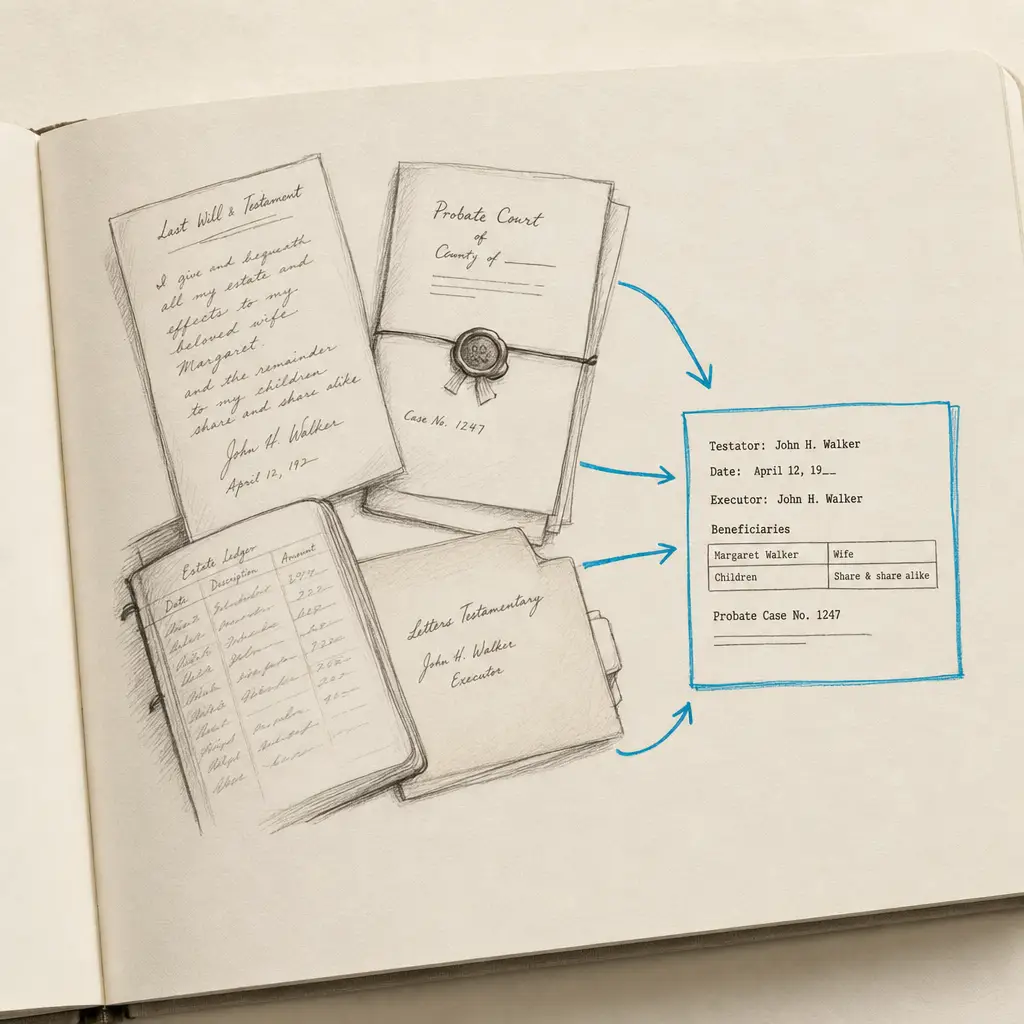
- Handwriting OCR processes holographic wills, probate case files, estate inventories, and executor correspondence
- It’s designed to handle historical handwriting styles and documents that may be decades old
- Produces searchable, editable text while preserving the structure of legal documents
- Works with scanned probate records without requiring special formatting
- Manual review remains essential for legal accuracy and context verification
Probate and estate work involves more handwritten documents than almost any other legal practice area. Holographic wills arrive for authentication. Historical estate records contain decades of handwritten inventories, account books, and correspondence. Executor notes document years of estate administration decisions. Beneficiary correspondence fills case files with handwritten questions, objections, and agreements.
This creates practical problems. You can’t search handwritten probate files electronically. Reviewing them is time-consuming. Sharing documents with beneficiaries, co-counsel, or courts means providing static scans that remain locked in their original form. When estates involve complex asset distributions or contested provisions, these limitations compound delays and increase costs.
This page explains what handwriting OCR can and cannot do for probate and estate documents. It’s not about technical specifications or feature lists. It’s about understanding whether this tool is relevant to your estate practice, what realistic expectations look like, and where it might fit in your existing workflows.
For broader context on handwriting OCR in legal practice, see Handwriting OCR for Legal Professionals.
Why Probate Work Involves So Much Handwriting
Unlike most legal practice areas that have largely transitioned to digital documents, probate and estate administration continues to generate and require handwritten materials for several reasons.
Holographic Wills Remain Legally Valid
Many jurisdictions recognize entirely handwritten wills as legally binding. When someone dies leaving a holographic will, probate courts must authenticate it, verify the testator’s handwriting, and interpret the provisions. These documents can be challenging to work with because they lack the formal structure of attorney-drafted wills and may use informal language or unclear terms.
Even when wills are typed, handwritten codicils and amendments frequently appear. A testator might add provisions by hand, cross out original bequests, or write notes in margins. These handwritten changes can affect the validity of provisions or create ambiguity that requires court interpretation. Every handwritten addition becomes a potential source of dispute that needs careful documentation and analysis.
Historical Estate Records Are Entirely Handwritten
Probate records from past decades exist only as handwritten originals or scanned images. Estate inventories listed assets by hand. Account books tracked estate income and distributions in handwritten ledgers. Property records documented real estate transactions through handwritten deeds and transfers.
When handling estates for families with multi-generational trusts, when researching precedents for unusual estate situations, or when tracing asset ownership through historical records, you need access to these documents. But without digital text, they remain difficult to search, reference, or analyze efficiently.
Executor Administration Generates Ongoing Handwritten Records
Estate administration spans months or years. Executors and administrators take handwritten notes during beneficiary meetings. They document asset valuation decisions, distribution discussions, and dispute resolutions by hand. Personal representatives maintain handwritten logs of actions taken, decisions made, and communications received.
These notes become part of the permanent estate file. When questions arise about why certain decisions were made, when beneficiaries challenge distributions, or when courts require accounting of executor actions, these handwritten records provide essential documentation. But they’re only useful if they can be accessed, searched, and referenced efficiently.
Beneficiary Correspondence Arrives in Handwritten Form
Beneficiaries often communicate through handwritten letters, particularly in estates involving elderly family members or those less comfortable with digital communication. These letters may contain questions about distributions, objections to proposed actions, agreements to settlements, or claims against the estate.
Each piece of correspondence needs to be preserved in the estate file, indexed for future reference, and sometimes shared with co-beneficiaries or courts. When correspondence exists only as handwritten documents, managing these communications becomes significantly more labor-intensive.
Common sources of handwritten content in probate and estate work:
- Holographic wills: Entirely handwritten testamentary documents requiring authentication, interpretation, and potentially expert handwriting analysis
- Probate case files: Court filings, judicial notes, attorney work product, and internal case documentation accumulated over months or years of administration
- Estate inventories: Detailed lists of estate assets, personal property descriptions, and valuation notes created during estate administration
- Executor correspondence: Letters to beneficiaries, communications with courts, and documentation of executor decisions and actions
- Beneficiary correspondence: Handwritten letters from heirs regarding distributions, objections, settlements, and estate matters
- Estate account books: Handwritten ledgers tracking estate income, expenses, distributions, and financial transactions over time
Why Standard OCR Doesn’t Work for Probate Documents
Traditional OCR was designed for printed text. It handles typed court documents, printed forms, and computer-generated records adequately. But the handwritten materials that fill probate files present fundamentally different challenges.
Printed text follows consistent patterns. Standard OCR systems learn those patterns and apply them reliably. This approach fails with handwriting because no two people write identically. A holographic will written by an elderly testator with shaky hands looks nothing like executor notes written quickly during a beneficiary meeting. Historical estate records use cursive styles that differ from contemporary handwriting.
When standard OCR encounters probate handwriting, the results are typically unusable. Characters are misread. Words are skipped entirely. Cursive writing becomes a string of incorrect characters. The output requires so much correction that manual transcription would have been faster and more accurate.
This means handwritten probate materials remain as static images even when they’re scanned. You can preserve them digitally, but you can’t search them, edit them, or work with them efficiently. Every time you need to find a specific beneficiary name, asset description, or distribution detail, you’re scrolling through page after page of handwritten documents.
For busy probate practices handling multiple estates simultaneously, this creates massive inefficiency. Time spent searching through unsearchable handwritten files is time not spent on substantive legal work. Documents that could be shared easily in editable form instead require time-consuming explanations of what handwritten sections contain.
What Handwriting OCR Handles in Probate Documents
Handwriting recognition designed specifically for variable handwriting approaches probate documents differently. Rather than expecting consistent printed text, it’s trained to recognize patterns across diverse writing styles, from careful testamentary language in holographic wills to rushed executor notes.
Historical Handwriting Styles
Probate work often involves documents created decades ago. Estate records from the 1970s, 1980s, and earlier use cursive writing styles that were standard then but less common now. Older testamentary documents may use formal penmanship that reflects different educational practices.
Handwriting OCR is designed to process these historical styles. It handles cursive writing where letters flow together continuously. It adapts to formal penmanship with flourishes and embellishments. It works with the kind of handwriting that appears in real probate records, not just contemporary samples.
This doesn’t guarantee perfection on every historical document. Severely degraded paper, faded ink, or extremely ornate handwriting will still present challenges. But the technology is built to handle the variation in handwriting styles that spans decades of estate documents.
Holographic Wills and Testamentary Documents
Holographic wills present unique challenges. They’re often written without legal guidance, using informal language and unclear structure. The handwriting quality varies dramatically depending on the testator’s age, health, and writing habits.
Handwriting OCR processes these documents to produce searchable, editable text. This allows you to search for specific beneficiaries, bequests, or conditions without reading the entire will repeatedly. You can extract specific provisions to quote in court filings. You can share editable text with beneficiaries rather than requiring them to decipher handwritten scans.
The system preserves document structure where possible, maintaining paragraphs, indentation, and formatting. This matters for testamentary documents where layout can affect interpretation. Understanding which provisions were grouped together, what was emphasized through spacing, and how the testator organized their intentions provides context that flat transcription loses.
Estate Administration Records
Estate files accumulate handwritten materials throughout administration. Executor notes document meetings, decisions, and actions. Inventory worksheets list assets with handwritten descriptions and valuations. Account books track financial transactions by hand. Correspondence files contain handwritten letters from beneficiaries, creditors, and courts.
Handwriting OCR makes these accumulated records searchable. When a beneficiary questions why a particular asset was distributed in a certain way, you can search executor notes for relevant decisions rather than reviewing months of handwritten files. When preparing final accountings, you can search handwritten transaction records for specific dates, amounts, or payees.
This searchability extends the useful life of estate records. Files that might have been consulted rarely after estate closure become searchable resources for future reference, precedent research, or related matters.
Mixed Content in Probate Files
Probate case files often contain pages with both printed text and handwritten additions. Printed probate forms have handwritten entries. Typed attorney notes include handwritten marginalia. Court documents arrive with handwritten clerk stamps and judicial notations.
Handwriting OCR handles this mixed content by recognizing both printed and handwritten text on the same page. It preserves the distinction so you can see what was original and what was added by hand. This is particularly valuable in probate work, where understanding the sequence and source of additions can affect legal interpretation.
What to Expect: Capabilities and Limitations for Estate Documents
Understanding what handwriting OCR can and cannot do with probate materials helps set realistic expectations. This technology accelerates specific workflows but doesn’t eliminate the need for professional judgment and legal expertise.
The table below shows typical performance across common probate document types:
| Document Type | What Works Well | What May Need Review |
|---|---|---|
| Holographic wills | Full text extraction, structural preservation, searchable beneficiary names | Ambiguous testamentary language, unclear cross-outs or amendments |
| Historical estate records | Cursive writing from past decades, formal penmanship styles | Severely degraded paper, extremely faded ink, ornate flourishes |
| Executor notes | Variable handwriting quality, rushed meeting notes, informal language | Heavy abbreviations, personal shorthand, context-dependent references |
| Estate inventories | Handwritten asset lists, property descriptions, valuation notes | Technical asset descriptions, unclear handwritten numbers or values |
| Beneficiary correspondence | Personal handwriting styles, cursive letters, varied writing quality | Emotional or informal language, unclear references to family relationships |
What It Handles Well
Handwriting OCR converts handwritten probate documents into editable, searchable text. This means you can search for beneficiary names, asset descriptions, or specific dates across documents that were previously locked as images. You can extract testamentary provisions to include in court filings. You can share editable versions of executor notes with co-counsel rather than static scans.
It processes scanned PDFs and images without requiring special preparation. Upload a scan of a holographic will, historical estate record, or executor correspondence, and the system processes it. No preprocessing, no format conversion, no technical configuration.
Document structure is preserved where possible. Testamentary provisions remain distinct. List formatting stays intact. This preservation matters for legal documents where structure affects interpretation and meaning.
What Requires Professional Review
Testamentary language that’s ambiguous or informal needs legal interpretation that technology cannot provide. If a holographic will uses phrases like “whatever Mom would have wanted” or “divide things fairly,” the OCR can extract those words, but legal expertise determines what they mean in context.
Handwritten amendments to typed wills may require careful examination. When testators cross out provisions, write between lines, or add notes in margins, the OCR extracts the text, but attorneys must determine legal effect and validity under applicable law.
Context-dependent references in executor notes need human verification. If notes reference “the house” without specifying which property, or mention “the agreement with John” without details, extracting the text is only the first step. Understanding what was meant requires knowledge of the estate and its administration.
The goal is not perfect transcription without review. The goal is to transform a completely manual process into one where technology handles the mechanical extraction and human expertise focuses on legal interpretation, context verification, and professional judgment.
Where This Fits in Probate and Estate Workflows
Handwriting OCR addresses specific bottlenecks in probate practice. It’s not a replacement for legal analysis or professional judgment. It’s a tool for removing friction from processes that currently require extensive manual work.
How probate attorneys use handwriting OCR:
-
Holographic will authentication: Converting handwritten wills to searchable text allows faster review by multiple attorneys, easier sharing with handwriting experts, and more efficient preparation of probate petitions. Rather than working exclusively with static scans, you can search for specific provisions, extract quotes for court filings, and create comparison documents for authentication purposes.
-
Estate inventory creation: Digitizing handwritten asset lists and property descriptions enables efficient organization, easier updates as valuations are finalized, and straightforward sharing with co-executors and beneficiaries. When assets are added or values change, working with editable text is significantly faster than recreating documents or maintaining parallel records.
-
Beneficiary communication: Making correspondence searchable means you can quickly locate specific communications without reviewing entire files. When beneficiaries ask “what did I say about the vacation property?” or when you need to verify what agreements were reached in writing, searchable correspondence saves substantial time.
-
Historical estate research: Processing decades-old probate records enables precedent research and family history investigations that would be impractical with handwritten originals alone. Archives that required manual page-by-page review become searchable resources for legal research and genealogical inquiries.
-
Executor documentation: Digitizing handwritten executor notes creates permanent, searchable records of estate administration decisions. When executors need to explain actions taken months earlier, when beneficiaries question distribution decisions, or when courts require accountings, searchable notes provide readily accessible documentation.
-
Multi-generation trust administration: Converting handwritten trust documents and amendment records to digital text enables efficient administration of continuing trusts. Rather than maintaining handwritten amendment histories, you can search across decades of trust administration for specific provisions, beneficiary changes, or distribution instructions.
The common thread across these uses is acceleration rather than replacement. The technology handles the mechanical work of converting handwriting to text. Probate professionals apply their expertise to reviewing output, verifying legal accuracy, and making the judgments that require professional training and knowledge of estate law.
Getting Started with Probate Document Processing
If you’re handling handwritten probate materials and wondering whether handwriting OCR is relevant to your practice, the most direct approach is to test it with your actual documents.
Probate handwriting varies significantly. Holographic wills differ from executor notes. Historical estate records use different writing styles than contemporary correspondence. The only way to know if handwriting OCR will accelerate your specific workflows is to try it with the kinds of materials you actually encounter in your practice.
HandwritingOCR offers a free trial with credits you can use to process sample documents. Upload a holographic will, a page of estate inventory, or executor correspondence. See how the output compares to what you’d get from manual transcription or other tools you’ve tried.
Your documents remain confidential throughout this process. They’re processed only to deliver results to you and are not used to train models or shared with anyone else. This is essential for probate materials where attorney-client privilege and executor confidentiality are not optional.
The service is designed to be straightforward. Upload your scanned document, process it, and download the results as editable text in Word, Markdown, or other formats. There’s no complex setup, no software installation, and no commitment required to test whether it works for your documents.
If it saves you time on the documents you tested, it will likely save time on similar probate materials. If it doesn’t meet your accuracy requirements for specific document types, you’ve learned that before investing further. Either way, you’ll have a clearer understanding of where handwriting OCR fits in probate and estate administration workflows.
Frequently asked questions
Can handwriting OCR process holographic wills for probate authentication?
Yes, handwriting OCR can process holographic wills to produce searchable, editable text. This allows you to search for specific beneficiaries or provisions, extract sections to quote in probate petitions, and share text versions with handwriting experts during authentication. However, legal interpretation of testamentary language, verification of handwriting authenticity, and determination of will validity still require professional legal expertise. The OCR handles text extraction while attorneys handle legal analysis.
How does handwriting OCR handle historical estate records from decades ago?
Handwriting OCR is designed to process historical handwriting styles including cursive writing that was common in past decades. Estate records with clear handwriting and reasonable scan quality typically process well, while severely degraded documents with faded ink or damaged paper will require more manual review. Performance depends on the specific condition of your historical documents. The best approach is to test with sample documents from your estate records to assess accuracy on your specific materials.
Are probate documents kept confidential when using handwriting OCR?
Yes. Your probate documents remain confidential and are processed only to deliver results to you. They are not used to train AI models, not shared with third parties, and not retained longer than necessary to complete processing. This is particularly important for estate materials where executor confidentiality, attorney-client privilege, and beneficiary privacy are essential. The service is designed with confidentiality as a fundamental principle.
Can handwriting OCR replace manual review of estate documents?
No, and it's not designed to. Handwriting OCR accelerates the mechanical work of converting handwritten text to digital format, but estate documents still require professional review. Ambiguous testamentary language, context-dependent executor notes, and legal interpretation of provisions need attorney expertise to verify and analyze correctly. The tool removes the bottleneck of manual transcription so probate professionals can focus their time on legal analysis rather than data entry.
What file formats work with handwriting OCR for probate documents?
Handwriting OCR processes scanned PDFs and common image formats including JPG, PNG, and TIFF. You can upload scans of holographic wills, estate records, or executor correspondence directly without converting them to specific formats first. The output can be downloaded as editable text in Word (DOCX), Markdown, or plain text formats depending on your workflow needs.