Enterprise

Handwriting OCR for Enterprise

The same engine that leads our public accuracy benchmarks, deployed the way your organisation needs it: dedicated capacity, processing pinned to your chosen region, a contractual SLA, and an API your product team can build on. For companies where handwriting recognition is part of the product or part of the workload, not an occasional convenience.

  • Dedicated instances and region-locked processing, configured to your requirements
  • Contractual uptime SLA with direct access to the engineering team
  • Your documents are never used to train AI models
★★★★★ 4.5/5 on G2 · 50,000+ users worldwide
Illustration of a corporate skyline where one tower is built from handwritten manuscript pages

Why enterprise

What changes at this tier

The self-serve product runs on shared infrastructure with standard terms. The enterprise tier exists for organisations that need guarantees: where the processing happens, what capacity is theirs, and what happens when something needs attention.

Region-locked processing

Your documents are processed in the region you choose, and only there. If your compliance posture, your customers, or your contracts require processing to stay within a specific jurisdiction, we pin your instance to it. Additional regions can be provisioned by arrangement.

Region-locked document processing

Dedicated instances

Capacity that is yours, not shared with our self-serve traffic. A dedicated instance gives you predictable throughput for volume workloads and a clean answer to vendor-assessment questions about tenancy and isolation. Configured per contract.

Dedicated processing capacity

A contract, not a checkout

Contractual uptime SLA, agreed support terms, purchase orders and invoicing, and a named human who answers. Procurement teams get the paperwork they need; your engineers get direct access to ours.

Contractual terms and support

Built to embed

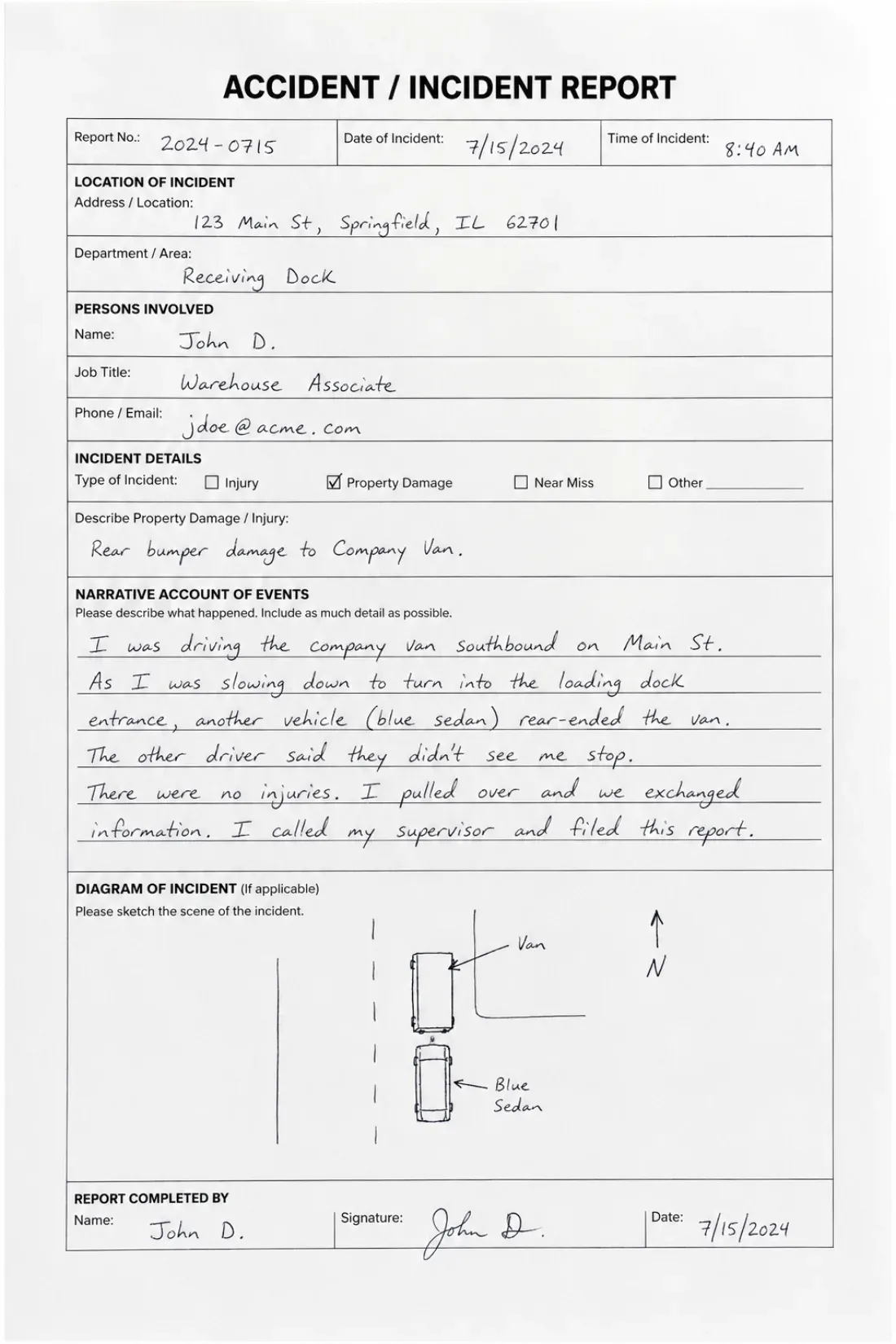
A straightforward REST API for transcription, plus custom extractors that pull structured fields from handwritten forms and documents. Product teams integrate in days. Your customers see your product; ours does the reading.

API integration and custom extractors

Product teams

Put the best handwriting engine inside your product

If your software touches scanned or photographed documents, some of them will always be handwritten, and generic OCR quietly fails on exactly those. Teams embed our API so that the hardest documents in their pipeline stop being support tickets. You keep your interface and your customer relationship; we supply the recognition layer, on infrastructure reserved for you.

  • REST API with straightforward integration, documented and stable
  • Custom extractors for structured data from handwritten forms
  • Dedicated capacity so your product's throughput is not shared
Structured data extracted from a handwritten document

Regulated & security-conscious organisations

Clear answers for your compliance team

Vendor assessments fail on vague answers. Ours are specific: processing pinned to your chosen region, documents never used to train AI models, audit logging available, and data-handling terms agreed in the contract rather than buried in a policy page. If your requirements go further, that is a conversation we are set up to have.

  • Processing location fixed by contract, not by default
  • No training on your data, ever
  • Audit logs and agreed retention and deletion terms
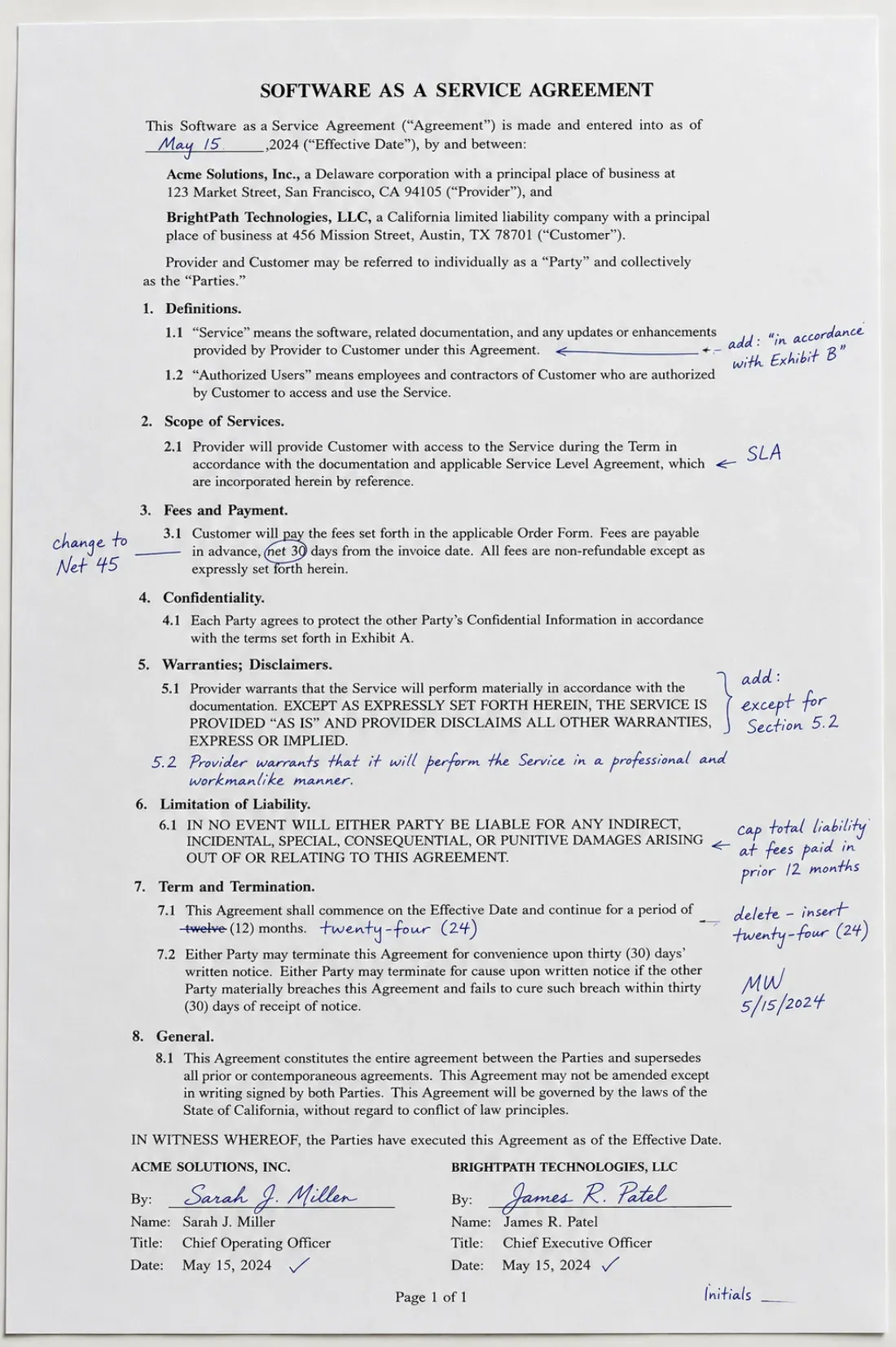
Contract documents under review

High-volume operations

When the workload is measured in tens of thousands of pages

Forms processing, claims intake, records conversion, archive backlogs: at volume, accuracy percentage points become real money, because every error is a human correction. Our engine leads public benchmarks on handwriting precisely so that fewer pages come back for review. Volume pricing is quoted per workload, and if you would rather hand the whole job over, our managed transcription service does exactly that.

  • Volume API pricing quoted against your actual workload
  • Custom extractors turn forms into clean structured records
  • Managed done-for-you processing available for defined projects
A stack of handwritten intake forms

FAQ

Frequently asked questions

Any other questions? Get in touch and we'll answer right away.

What is a dedicated instance?

Processing capacity reserved for your organisation rather than shared with self-serve traffic. It gives you predictable throughput for volume workloads and a clear tenancy story for vendor assessments. The exact configuration, including isolation level and capacity, is agreed per contract based on your requirements.

What does region-locked processing mean?

Your documents are processed on infrastructure in the region you choose and nowhere else, fixed by contract. US region-locking is available today, and additional regions can be provisioned by arrangement. If your compliance requirements name a jurisdiction, tell us which one and we will confirm what we can provision.

How does enterprise pricing work?

Every enterprise engagement is quoted individually, because the price depends on the configuration: region-locking, dedicated capacity, SLA terms, and expected volume. Send a short description of your requirements through the contact form and we will come back with a clear quote. Purchase orders and invoicing are supported.

Is there an SLA?

Yes. Enterprise contracts include a contractual uptime SLA with agreed support terms, alongside direct access to the engineering team rather than a ticket queue. The specific commitments are set out in your contract.

Will our documents be used to train AI models?

No. Documents are processed only to produce your results and are never used to train AI models. Retention and deletion terms are agreed in the contract, and audit logging is available.

We already use the API on a standard plan. When should we move to enterprise?

Move when you need something the standard plans cannot promise: processing pinned to a region, capacity that is contractually yours, a formal SLA, or procurement paperwork. If you are simply growing in volume, standard plans may carry you further than you expect; ask us and we will tell you honestly where the line is.

Do you offer offline or on-premise deployment?

As a custom engagement, yes. Fully offline processing is not an off-the-shelf option: it means building and validating a dedicated local application for your environment, so it is scoped and priced as a development project for organisations that genuinely need air-gapped processing. If that is you, tell us your requirements and we will give you an honest assessment of scope, cost, and timeline. For many compliance requirements, a region-locked dedicated instance delivers the same assurance at a fraction of the cost, and we will tell you when that is the better answer.

Can you process our backlog for us instead?

Yes. If the need is a defined project rather than an ongoing integration, our managed transcription service takes the whole job: you transfer the scans, we tune the processing, review the output, and deliver it in your format. Many enterprise customers use both: managed processing for the backlog, the API for the ongoing flow.

Try it on your own documents

Tell us what you are building

A short description of your use case, expected volume, and any compliance requirements is enough. We will come back quickly with a straight answer on fit, a quote, and a realistic timeline. If self-serve is genuinely the better option for you, we will say so.

Honest guidance

Is the enterprise tier right for you?

Most teams should start with the standard Handwriting OCR product: the same engine, self-serve, priced per page, working in minutes. If you are evaluating us, the fastest path is to run your own documents through it and judge the output.

The enterprise tier exists for the situations where the standard product’s terms, not its accuracy, are the blocker. In practice that is three situations.

The processing location is a requirement, not a preference. Your contracts, your regulator, or your customers require document processing to stay in a named jurisdiction. Region-locking pins your instance to it, in writing.

You are building on us. When our API sits inside your product, you need capacity that does not compete with anyone else’s traffic, an SLA your own customers can inherit, and an engineering contact who knows your integration. That is what a dedicated instance is for.

Procurement needs a counterparty. Purchase orders, vendor assessments, data-processing terms, agreed retention: enterprise engagements come with a contract and a named human, not a checkout page.

What we will not do: sell you a dedicated instance you do not need. Describe your requirements and you will get a straight answer about fit, including “the standard plan is enough” when it is true.